2012년 3월 23일 QUIZ
문제1: The researchers from Brazil examined the
effectiveness of fluyoride varnish ( Duraphat ) at reducing white spot lesions.
They measured the mineralized content of the enamel for the mesial, distal,
gingival and occlusal quadrant of each tooth. In the comparison between the
varnished and unvarnished teeth,
(1) overall difference was ( )
(2) difference was ( ) in gingival quadrant.
|
significant, not significant |
답
not significant, not significant
Demito CF, Rodrigues GV, et al. Efficacy of a Fluoride Varnish in Prevention White-Spot Lesions as Measured with Laser Fluorescence. J Clin Orthod 2011;45(1):25-29
문제 2: Followings are materials used in
interproximal reduction. (advocated by Dr. Zachrisson)
A. perforated diamond-coated stripping disk
B. cone-shaped triangular diamond bur
C. fine sof-lex disk
Place them (
, , ) in order of use.
답
( A, B, C )
Zachrisson BU, Minster L, et al. Dental Health Assessed After Interproximal Enamel Reduction: Caries Risk in Posterior Teeth. Am J Orthod Dentofacial Orthop 2011;139:90-98
2012년 3월 30일 QUIZ
문제 1: It is reported that chitosan-containing
dentifrice reduces demineralization around orthodontic bracket.
(1) Chitosan is derived from chitin which is a glucosamine and is mainly contained in the shells of ( ) and ( ).
(2) It has a pH of 6.3, which is suitable
to buffer the oral pH value ( low, high) enough to prevent the deleterious
action of organic acids on enamel surface.
답
(1) Crabs, shrimps (2) low, high
Uysal T, Akkurt DM, et al. Does a Chitosan-Containing Dentifrice Prevent Demineralization Around Orthodontic Brackets? Angle Orthod 2011;8:319-325
문제 2: The Molmo university conducted a
research regarding unilateral post x-bite correction in the mixed dentition,
using Quad helix and expansion-plate appliance.
(1) Q-helix group showed (superior,
similar, inferior) effect in increase of maxillary inter-molar width than the
expansion-plate appliance.
(2) During treatment, slight increase of
inter-molar width occurred also in the mandible in (Q-helix group, expansion-plate
appliance group, both groups).
(3) 3 years after treatment, expansion was (stable, not stable) in Q-helix group.
(4) 3 years after treatment, expansion was (stable, not stable) in expansion-plate appliance group.
답
(1) similar, (2) expansion-plate appliancegroup, (3) stable, (4) stable
Petrén S, Bjerklin K, Bondermark L. Stability of Unilateral Posterior Crossbite Correction in the Mixed Dentition: A Randomized Clinical Trial with a 3-Year Follow-Up. Am J Orthod Dentofacial Orthop 2011;139:e73-e81
2012년 4월 6일 QUIZ
문제 1: The Catholic University in Belgium performed a study regarding longitudinal changes in microbiology and clinical periodontal parameters after removal of fixed orthodontic appliances.
3 months after the removal of appliances,
(1) The amount of anaerobic bacteria (A, B).
(2) GCF flow (A, B).
(3) Probing depth (A, B).
(4) BOP for banded site (A, B).
(5) BOP for bonded site (A, B).
|
A, decreased to pre-tx level B, decreased but did not return to pre-tx level |
답
(1) A (2) B (3) B (4)
B BVan Gastel J, Quirynen M, et al. Eur J Orthod Longitudinal Changes in Microbiology and Clinical Periodontal Parameters After Removal of Fixed Orthodontic Appliances. 201;33:15-2
문제 2: The key to managing a
situation in which patients want to
negotiate fees is to reinforce several important messages
with them when they ask for a discount. The first key message should
focus on ( ) and refer
specifically to materials, technologies, or methods. I call this the
“confidence factor.” The second key
message should explain the pros and cons. One example is to inform patients that
the treatment you recommend will be (
)
expensive in the long term because it will help them preserve their overall
health and well-being.
|
quality, quantity, less, more |
답
(1) quality, (2) quantity
Levin R. When Patients Want to Negotiate Fees. J Am Dent Assoc 2011; 142:202-203
2012년 4월 13일 QUIZ
문제 1.:According to the guest lecture by Dr.Jon D Holmes,
Orthognathic surgery is generally done in an outpatient setting,
so that patients return home the day of the
procedure.
|
outpatient, inpatient |
답
outpatient
문제
2: Based on the review
"Lower incisor extraction" of Dent Press J Orthod
2010;15:143-61
the main indication
to extract lower incisor is the presence of lower anterior
excess or upper anterior deficiency.
답
teeth size discrepancy
Matsumoto MAN, Romano FL, et al. Lower Incisor Extraction: An Orthodontic Treatment Option. Dent Press J Ortho 2010;15:143-161
2012년 4월 20일 QUIZ
문제 1: During the follow-up observation period of orthognathic surgery, ( ) was most prone to altered sensation.
①
chin
②
lip
③
cheek
④
teeth
답
① chin
Kim Y-K, Kim S-G, Kim J-H. Altered Sensation After Orthognathic Surgery. J Oral Maxillofac Surg 2011; 69:893-898.
문제 2: ( ) is an optical, visible light-based system that can be used to detect and quantify early demineralization of enamel.
①
QLF (quantitative light-induced fluorescence)
② Photographic
examination
③ Clinical
examination
답
① QLF (quantitative light-induced fluorescence)
Emad F. Al Maaitah, Adejumoke A. Adeyemi Susan M. Higham, Neil Pender, and Jayne E. Harrison. Factors affecting demineralization during orthodontic treatment: A post-hoc analysis of RCT recruits. Am J Orthod Dentofacial Orthop 2011; 139:181-191.
2012년 4월 27일 QUIZ
문제 1: Describe the following abbreviation
l LED
답
Light Emitting Diode
문제 2: The term ( ) drinks refers to all drinks except alcohol, mineral water, fruit juice, tea, coffee, or milk-based drinks, which may or may not be carbonated.
답 soft
Emshoff R, Moriggi A, et al. Are Temporomandibular Joint Disk Displacements without Reduction and Osteoarthrosis Important Determinants of Mandibular Backward Positioning and Clockwise Rotation? Oral Surg Oral Med Oral Pathol Oral Radiol Endod 2011;111:435-441
문제 3: If you areplanning to move or renovate your practice, which factors will youconsider?
① The
current facility
② The
reason for relocation or renovation
③ The
cost
④ Contingency
plans
⑤ All of
above
답 ⑤
Relocation or Renovation. Levin RP. J Am Dent Assoc 2011;142:333-334259
2012년 6월 15일 QUIZ
문제 1: Describe the following abbreviation.
1) ALARA
2) CBCT
3) Sv
답
1) as low as reasonably achievable
2) cone beam computed tomography
3) sievert
Guest Presentation-Orthodontic Microsurgeryfor Rapid Dental Repositioning in Dental Malpositions
문제 2: CBCTscanner has ( ) radiation, ( ) signal to noise ratio, ( ) noise, and ( ) artifact caused by metallic structures as compared to conventional CTs.
|
Higher, lower, more, less |
답
lower, lower, more, less
Guest Presentation-Orthodontic Microsurgery for Rapid Dental Repositioning in Dental Malpositions
문제3: Fluorosis may (increase, decrease) bondstrength when using a self-etching primer.
답
decrease
Isci D, Saglam AMS, et al. Effects of
Fluorosis on the Shear Bond Strength of Orthodontic Brackets Bonded with a
Self-Etching Primer. Eur J Orthod 2011;33:161-166
2012년 9월 14일 QUIZ
문제 1. Zoledronic acid is a synthetic
bisphosphonate with anti-bone (resorption,formation) activity. An annual dose
of zoledronic acid may prevent recurring fracture in patients with a previous
hip fracture.
답
resorption
Effect of zoledronic acid on bone healing subsequent to mini-implant insertion. Angle Orthodontist, 2011;81(3):363-369
문제 2. Obstructive Sleep Apnea(OSA) has a considerable impact on quality of life, with excessive daytime sleepness, depression Choose the treatment of OSA.
① CPAP(Continuous positive
airway pressure)
② Uvula plasty
③ Mandibular advancement
④ All of
above
답
4
Controlled, prospective trial of psychosocial function before and after mandibular advancement splint therapy. Am J Orthod Dentofacial Orthop 2011;139:581-7
2012년 9월 21일 QUIZ
문제 1. Describe the following abbreviations
1) OSA
2) CPAP
답
1) Obstructive sleep apnea
2) Continuous positive
airway pressure
Maxillomandibular Advancement for Treatment of Obstructive Sleep Apnea Syndrome: A Systemic Review. J Oral Maxillofac Surg, 2011;69:e165-e176
문제 2. Recently, University of Amsterdam investigated risk factors for anterior disc displacement with reduction(AADR) and intermittent locking in adolescents.
What was a risk factor for intermittent locking? ( )
What was a risk factor for AADR? ( )
(
) may be a risk factor for intermittent locking and ( ) may be a risk factor for AADR.
답
clenching, age
Risk Factor for Anterior Disc
Displacement with Reduction and Intermittent Locking in Adolescents. Journal of
Orofacial Pain, 2011;25(2):153-160
2012년 9월 28일 QUIZ
문제 1.
1) The sensitivity rate of a test is the probability that the test results are positive, given that the patient has the disease. (T, F)
2) The specificity rate of a test is the probability that the test results are negative, given that the patient does not have the disease. (T, F)
답
1)
T
2) T
Diagnostic Value of Ultrasonography in Temporomandibular Disorders. J Oral Maxillofac Surg 2011;69:1304-1310
문제 2. According to the study about the esthetic preferences for the shape of anterior teeth in a smile (AJODO 2011:139;806-14), (round, square) incisal edges on maxillary incisors can significantly improve smile esthetics.
답
round
Esthetic preferences for the shape of anterior teeth in a posed smile. Am J Orthod Dentofacial Orthop 2011;139:806-14
2012년 10월 5일 QUIZ
문제 1. The suggestions in Dr. Levin’s article offer a very practical way to improve team morale in
your office.
1. Dentists need to have a .
2.
Dentists should begin the day the right way.
The more the dentist cares about the team members, the more the team members will care about the dentist and the practice.
3.
Dentists should go out of their way to recognize team members throughout the
day.
4.
Dentists should schedule an with staff members at least once per quarter.
5. Dentists can consider instituting a .
|
A. out-of-the office activity B. Bonus system C. positive attitude |
답 C, A, B
Building better team morale. JADA 2011;142(7):855-856
2012년 10월 26일 QUIZ
문제 1.Autonomous University State of Mexico investigated the influence of hydrogen and carbamide peroxide or resin-based coating materials (Beauty Coat, White Coat) for dental bleaching on the shear bond strength of orthodontic brackets.
(1) Hydrogen and carbamide peroxide (did, did not) reduce the shear bond strength.
(2) Resin-based coating materials (did, did not) reduce the shear bond strength.
답
(1) did, (2) did not
Angle Orthodontist, Vol 81, No 4, 2011:179
문제 2. Recently, University of Thessalonikievaluated the effect of miniscrew length and diameter on primary stability with two force levels, 50 gm and 250gm).
The results showed that length and
diameter became significantly influencing parameters on miniscrew stability
only when a (low, high) force level was applied.
답
high
European Journal of Orthodontics. 2011;33:381-387
2012년 11월 9일 QUIZ
문제 1. Recently, Stuttgart Hospital evaluated condylar resorption and functional outcome after “unilateral” sagittal split osteotomy.
Of 23 patients, unilateral condylar resorption was seen in (one, two) patient(s), and bilateral resorption was noted in (one, two) patients(s). Excursive movements were (significantly, not significantly) different between the operated and the unoperated side.
답
(1) one, (2) one, (3)
Oral Surg Oral Med Oral Pathol Oral RadiolEndod 2011;112:315-321
문제 2. Florence University have assessed the effects of a compliance-free appliance, Forsus device, in Class Ⅱ patients.
The Forsus device had a restrictive effect
on the (maxilla, mandible), and moved the (maxillary, mandibular ) molars and
incisors forward.
답
(1) maxilla, (2) mandibular
Angle Orthodontist, Vol 81, No4, 2011
2012년 11월 30일 QUIZ
문제 1. (1) In Caucasian population, ( ) % of impacted maxillary canines were palatally positioned. (50 65 85 95)
(2) Dr. Baccetti recommends interceptive procedures to avoid
impaction of maxillary canines. Explain it briefly.
답
(1) 85, (2) C ext + (TPA, HG, RPE)
Guest lecture by Tiziano Baccetti
문제 2. (1) Patient compliance is greater with vacuum-formed retainers initially but, overall, is greater with Hawley retainers. (O, X)
(2) Esthetic concerns were a significant determinant of patient
compliance. (O, X)
답
(1) O, (2) X
Pratt MC, Kluemper GT, Lindstrom AF. Patient compliance with orthodontic retainers in the postretention phase. AJO-DO 2011;140:196-201
문제 3. 1) Untreated isolated growth hormone deficiency reduces all linear craniofacial measurements. (O, X)
2) The gonial angle was increased in isolated growth hormone
deficiency individuals. (O, X)
답
(1) O, (2) O
Oliveira-Neto LA, Melo
Mde F, et al. Cephalometric features in isolated growth hormone deficiency. AO
2011;81:578-83
문제 4.(1) Tooth movement in the ovariectomy group was more rapid than in the control group throughout the experimental periods. (O, X)
(2) Orthodontically induced root resorption in the ovariectomy
group was deeper and more severe than in the control group. (O, X)
답
(1) O, (2) O
Sirisoontorn I, Hotokezaka H, et al. Tooth movement and root resorption; The effect of ovariectomy on orthodontic force application in rats. AO 2011;81:570-7
2012년 12월 14일 QUIZ
문제 1.
The researchers from Sweden examined the long-term effects of ectopic canines
on maxillary incisor root resorption.
(1) In most cases, the root
resorption occurred on the (buccal, palatal) aspect of the maxillary incisors
(2) Maxillary incisor root resorption caused by canine ectopic eruption does not get worse in general after the maxillary canine is moved away from the affected teeth. (O, X)
답
(1) palatal, (2) O
Maxillary incisor root resorption induced by ectopic canines
A follow-up study , 13to 28 years posttreatment, Angle Orthod. 2011;81:800-806.
문제 2.
The pontifical Catholic University of Brazil conducted a research regarding
transverse maxillary deficiency, using Haas expander and Hyrax expander.
(1) To obtain standardized images and compare the measurement
between before and after expansion, the authors used the axial slices that
displayed the root canal in the most apical region of the (palatal,
mesiobuccal, distobuccal) root of maxillary (first, second) permanent molars.
(2) The Hyrax expander produced greater orthopedic effects than did the Haas expander, but this effect might not be clinically significant. (O, X)
답
(1) palatal, first (2) O
Immediate effects of rapid maxillary expansion with Hass-type and hyrax-type expanders: A randomized clinical trial. Am J Orthod Dentofacial Orthop 2011;140:366-76
2012년 12월 21일 QUIZ
문제 1. What is the best solution for managing the departure of a long-term employee?
Practice should have .
① Documented system
② New staff member
③ New doctor
④ All of above
답 Documented system
Changing of the Guard: What Should a Dental Office Do to Handle the Departure of a Long-Term Employee? Roger P. Levin. J Am Dent Assoc 2011;142:1197
문제 2. Choose the answer in the box.
|
Wake-time bruxism (tooth clenching) Sleep bruxism |
(1) ( ) is considered to
be an oral parafunctional activity and is characterized by sustained
masticatory muscle contraction.
(2) ( ) is characterized by episodes of rhythmic masticatory muscle activity and usually reported by bed partners and parents
답
(1) Wake-time bruxism (tooth clenching)
(2) Sleep bruxism
Prevalence and Risk Factors of Sleep Bruxism and Wake-Time Tooth Clenching in a 7- to 17-Yr-Old Population. Carra MC, Huynh N, et al. Eur J Oral Sci 2011;119:386-394
2013년 3월 8일 QUIZ
문제 1: The oral surgeons in Shanghai Jiaotong University have assessed the changes in disc position, disc length and condylar height in the patients with ADD of TMJ who had received no treatment. One year later,
(1) the disc displaced
more (anteriorly, posteriorly)
(2) the disc
(lengthened, shortened).
(3) the condylar height
(increased, decreased).
답
(1) anteriorly (2) shortened (3) decreased
Cai X, Jin JM, Yang C. J Changes in Disc Position, Disc Length,
and Height in the Temporomandibular Joint With Anterior Disc Displacement: A
Longitudinal Retrospective Magnetic Resonance Imaging Study. 2011;69:e340-e346
문제 2: Texas Health ScienceCenter conducted a prospective RCT to determine the effectiveness of MI Paste Plus in prevention and reduction of white spot lesions. The orthodontic patients were asked to administer the paste, either MI Paste or placebo paste, by using a tray for 3 to 5 minutes after brushing at night. Three months later,
(1) MI Paste Plus group
showed (reduction, no change, increase) in
enamel decalcification scores.
(2) placebo paste group
showed (reduction, no change, increase) in
enamel decalcification scores.
(3) MI Paste Plus restores
minerals to the teeth and helps to stimulate saliva production. It contains
casein phosphopeptide which stabilizes the amorphous calcium phosphate in
solution, maintaining (high, low) concentration gradients of calcium and
phosphate in the white spot lesion, thus effecting high rates of enamel remineralization.
답
(1) reduction (2) increase (3) high
Robertson MA, Kau CH, et al. MI Paste Plus to Prevent
Demineralization in Orthodontic Patients:A Prospective Randomized Controlled
Trial. 2011;140:660-668
2013년 3월 15일 QUIZ
문제 1: Granada Universityevaluated periodontal status of mandibular 2nd molars after impacted 3rd molars are extracted in young adults. One year later,
(1) the probing sulcus
depth showed (improvement, no change, worsening).
(2) Plaque index
(increased, decreased).
(3) Gingival index
(increased, decreased).
답
(1) improvement (2) decreased (3) decreased
Montero J, Mazzaglia G. Effect of Removeing an Impacted
Mandibular Third Molar on the Periodontal Status of the Mandibular Second
Molar. 2011;69:2691-2697
문제 2: The University ofMichigan evaluated the quality of treatment outcomes achieved with a finishing protocol involving serpentine wires and a tooth positioner.
(1) One week before debonding, molar bands and archwires were removed, and 0.008-inch ligature wires were placed in a ( ) configuration from second premolar to second premolar.
(2) The next week, all fixed appliances were removed, and a tooth positioner was delivered with instructions to wear it full time for ( ) hours. After that, the patients were instructed to wear the positioner as much as possible for ( ) days, and then 4 hours per day and at night for 2 to 3 weeks.
답
(1) serpentine (2) 24 (3) 5
Stock GJ, McNamara JA Jr, Baccetti T. Am Efficacy of 2 Finishing
Protocols in the Quality of Orthodontic Treatment Outcome. 2011;140:688-695
2013년 3월 22일 QUIZ
문제 1: University of Bergenevaluated long-term clinical and radiographic outcomes of nonsurgically treated mandibular condylar fractures in children.
(1) In general, clinical outcome was (favorable, unfavorable).
(2) the remodeling of condylar process was (acceptable, not acceptable).
(3) (Bilateral, Unilateral) fractures increased the risk for unfavorable clinical outcome.
답
(1) favorable (2) acceptable (3) Unilateral
Lekven N, Neppelberg E, Tornes K Long-Term Follow-Up
of Mandibular Condylar Fractures in Children. 2011;69:2853-2859
문제 2: Untreated palatallydisplaced canines may remain unerupted, requiring surgical exposure and more complex treatment.
Which one is advocated as treatment techniques? ( )
① extraction of primary canine
② TPA
③ RME
④ all of the above
답
4
Baccetti T, Sigler LM, McNamara JA Jr. Eur An RCT on Treatement
of Palatally Displaced Canines With RME and/or a Transpalatal Arch.
2011;33:01-607
2013년 3월 29일 QUIZ
|
1. Preparing
the patient for the surgery |
1. Preparingthe patient for the surgery
- Overall
length of the treatment time, information about surgery ( orthodontic, surgical
and medical standpoint)
-
Communication using pamphlet and consultation
-
Proper and specific referral →
initial surgical consultation
-
Ultimate decision to proceed lies solely with the ( ).
답
patient
Dr. Marco Caminiti Orthodontic Goals for Ideal Orthognathic
Surgical Outcomes
2. Obtainingcomplete and accurate data
- Data
need to be shared with the surgeon: initial consultation
- VTO:
communicating with the patient about facial change, uncertainty with regard to
osteotomy, possible movement with decompensation.
3. Determining theskeletal discrepancy and commitment to a treatment plan
- Skeletal
discrepancy: course and predictability of the surgery
-
( ) needs to commit to
a diagnosis
답
orthodontist
Dr. Marco Caminiti Orthodontic Goals for Ideal Orthognathic Surgical Outcomes
4. Determining the transverse discrepancy
- Indication of S-RPE
① over ( ) mm transverse discrepancy,
② significantly
crowded dentition with non-extraction treatment
③ a flattened ( ) with transverse discrepancy
④ no room for any alveolar expansion and orthodontic limitation to
obtain a good setup
⑤ questions about long term stability and if any of the orthodontic
movements pre-surgery maybe unstable, for example, an ( )
⑥ LeFort advancement of greater than a
5 mm is planned with segmentalization to expand the maxilla
답
① 5-6 ③ palate ⑤ openbite
Dr. Marco Caminiti Orthodontic Goals for Ideal Orthognathic
Surgical Outcomes
5. Plan with the surgeon to obtain a surgically based treatmentplan
- Surgical limitation: The amount of instability in surgery increases with the degree of difficulty of the surgery.
- LeFort impactions are very (stable, unstable).
- Sagittal split advancements are (stable, unstable).
- LeFort downgrafts, there is greater and greater ( ).
* The degreeof mandibular c-clockwise rotation is greater than 7~8 degrees → condylar
resorption
* Downgrafting
in maxilla: unstable, little aesthetic outcome
답
instability
Dr. Marco Caminiti Orthodontic Goals for Ideal Orthognathic Surgical Outcomes
2013년 4월 5일 QUIZ
문제 1: The Tokyo Medical Universityevaluated the dental arch size between obese and non-obese patients with obstructive sleep apnea (OSA).
(1) The tongue size and both
upper and lower dental arch widths were significantly (larger, smaller) in
obese than in non-obese OSA patients.
답
larger
Maeda K, Tsuiki S. Obesity Affects Average Tongue Size & Arch Dimensions
(2) There was (significant,
no) difference in the severity of OSA between obese and non-obese patients.
답
no
Maeda K, Tsuiki S. Obesity Affects Average
Tongue Size & Arch Dimensions
2013년 4월 12일 QUIZ
Thesuggestions in Dr. Levin’s article offer 4 ways to deal with negative publicity of the practice.
1. Try to ( ) negative publicity.
답
avoid
Levin RP. Dealing With Negative Publicity.
2012;143:70-71
2. Be ( ) of what is being said about your practice by monitoring social media and rating websites.
답 avoid
Levin RP. Dealing With Negative Publicity. 2012;143:70-71
3.
Try not to react defensively.
4. Respond to negative publicity by using excellent ( ).
답
public reactions
Levin RP. Dealing With Negative Publicity.
2012;143:70-71
2013년 4월 19일 QUIZ
|
1. Preparing
the patient for the surgery |
6. Decompensation
- Presurgical concept: communication about
orthodontic goal is needed.
- Uprighting the assisting dentition over the
basal bone without expanding the alveolus.
- Leveling, aligning, and elimination of the
curve of Spee except Class II (deep bite, open bite) case.
답
deep bite
Dr. Marco Caminiti Orthodontic
Goals for Ideal Orthognathic Surgical outcomes
7. Removable of wisdom teeth
- Removing wisdom teeth during surgery is not recommended.
8. Ensuring optimal TMJ health
- Common rules find that correction of dentofacial discrepancy does actually improve overall TMJ health in about ( )% of patients
답
70
Dr. Marco Caminiti OrthodonticGoals for Ideal Orthognathic Surgical outcomes
9. Ideal orthodontic mechanical support
- Obtaining proper mechanical
attachment is important.
- Soldered hook, crimped closed hook, Kobayashihook, etc.
10. Assisting postoperative monitoring
- The surgeon needs to look at the lost fixation, ( ) of osteotomy, creation of instability, ( ), and anything that may cause the occlusion to shift.
답
movement,
poor splint
Dr. Marco Caminiti Orthodontic
Goals for Ideal Orthognathic Surgical outcome
2013년 4월 26일 QUIZ
문제1: It is reported that eating disorders can potentially affect both general health and oral health. The researchers from Norway and Sweden found that patients with eating disorders may present with ( ).
① Burning tongue
② Cracked lips
③ Dental erosion
④ All of above
답 ③
Johasson A-K, Norring C, et al. Eating Disorders and oral health: A matched case-control study. 2012;120:61-68
문제2: The Oslo University conducted a research regarding gingival recession in mandibular incisors after orthodontic treatment.
1) The prevalence of gingival recession after orthodontic treatment was (low, high).
2) Gingival recession was predominantly found on (central incisors, lateral incisors).
답
1) high, 2) central
Kjellsen K, et al. Prevalence and severity of vestibular recession of mandibular incisors after orthodontic treatment: A case-control retrospective study. 2012;82:42-47
2013년 9월 13일 QUIZ
문제1: Energy drinks contain large amounts of caffeine, but they also contain herbal extracts such as ginseng and guarana.
(1) Ginseng and guarana have been reported to interfere with the
aggregation of ( ).
(2) So, they produce an impairment of (
) clotting.
(3) For this reason, energy drink use before ( ) should be strongly discouraged.
답
(1)
platelet (2) blood (3) surgery
Foran M, Strickland F, et al. Excessive Intraoperative Bleeding with chronic energy drink consumption. J Oral Maxillofac Surg 2012;70:1439-41
문제2: When utilizing an orthodontic appliance, it might be important tounderstand the expected subjective effects on the patient, in addition to the biomechanical effects on the teeth. The researchers from Turkey evaluated pain, anxiety, and stress during RME treatment.
(1) A ( ) was used to
assess pain levels at 7 time points.
(2) A standardized ( )
was used to assess anxiety levels.
(3) ( ) samples were taken to
assess cortisol levels.
답
(1) Visual analogue scale (VAS) (2) questionnaire (3) salivary
Gecgelen M, Aksoy A, et al. Evaluation of stress and pain during rapid Maxillary expansion treatments. J Oral Rehabil 202:39:767-75
2013년 9월 27일 QUIZ
문제1: Quad-helix appliance treatment is believed to cause the maxillary firstmolars to tip ( ) and ( ) and result in a delay in the eruption of the maxillary second molars.
답: distally, buccally
Kobayashi Y, Shundo I, et al. Treatment Effects of Quad-Helix on the Eruption Pattern of Maxillary Second Molars. Angle Orthod 2012; 82(July):676-681
문제2: Drs Ciarlantini andMelsen reported a biologic approach regarding miniscrew-retained pontics in growing patients. In order to allow vertical development of the alveolar process, the screw was placed in the ( ) side of the edentulous area, at the height of the approximate midpoint of the adjacent dental roots and ( ) to the alveolar process.
답: palatal, perpendicular
Ciarlantini RE, Melsen B.Miniscrew-Retained Pontics in Growing patients: A Biological Approach. J Clin Orthod 2012.; 46(October):638-640
문제3: In spite of improvedaesthetics, Plastic brackets exhibit some problems, such as tie-wing ( ) and slot ( ) due to lack of strength and stiffness.
답: fracture, distortion
Ali O, Makou M, et al. Laboratory Evaluation of Modern Plastic Brackets. Eur J Orthod 2012; 34(October):595-602.
Avoiding malpracticeclaims
Guest lecture by Elizabeth Franklin
|
1. Root
resorption and periodontal disease |
1. Root resorption and periodontal disease
The problem about root resorption and periodontal disease during treatment could be prevented by using ① ( ) before treatment.
Root resorption
- Review a good quality of ② ( ) x-ray.
- Check; pre-existing root resorption, familial history of root resorption.
Periodontal disease
- Be sure to be ③( ) before beginning treatment.
- Evaluate periodontal condition and keep ④( ) in the record.
- Use informed consent.
-
Take
progressive x-ray.
← alveolar bone loss and
mobility of tooth
← pt’s complaint &
broken appointment
답
① Informed consent ② beginning ③ periodontal healthy ④ the document
Dr
Elizabeth Franklin Avoiding malpractice claims
Practice management activity
- Orthodontic record is cornerstone of the treatment.
- ( ) are optimum defense.
- Never alter pt’s record → Draw a single line and write new information underline below.
- Electronic record is easy to use, generally safe, and provide platform for creating excellent record.
- Keep
all orthodontic records.
답
Completed records
Dr
Elizabeth Franklin Avoiding malpractice claims
2013년 10월 18일 QUIZ
문제1: Choose the answer in the box.
· ( ) is a term used to describe the developmental absence of one or more teeth, ( ) where six or more teeth are missing, and ( ) the developmental absence all teeth.
답: Hypodontia, oligodontia, anodontia
Meaney S, Anweigi L, et al. The impact of Hypodontia: A Qualitative
study on the experiences of Patients. Eur J Orthod 2012;34:547-52.
문제2: The researchers from Brazil conducted a meta-analysis to evaluate long-term change of surgically assisted rapid maxillary expansion. A significant relapse is expected in the (intercanine width, intermolar width) after expansion.
답: intercanine width
Vilani GNL, Mattos CT, et al. Long-Term Dental and Skeletal Changes in Patients Submitted to Surgically Assisted Rapid Maxillary Expansion: A Meta-Analysis. Oral Surg Oral Med Oral Pathol Oral Radiol 2012;114:689-97
2013년 10월 25일 QUIZ
문제1: In recent study on the influence of pH levels on properties of nonlatex and latex elastics (Angle Orthod. 2012;82:709-14), differences in salivary pH have (no, significant) effect on nonlatex or latex elastic force degradation.
답: no
Lacerda dos Santos R, Pithon M, et al. The
Influence of pH levels on mechanical and Biological Properties of Nonlatex and
Latex Elastics. Angle Orthod 2012;82;709-14.
문제2: The researchers from India evaluated and compared the force levels of esthetic NiTi(coated) wires and regular NiTi (uncoated). Esthetic NiTi wires that are coated on all surfaces shows a (increase, decrease) in force levels relative to uncoated wires.
답: decrease
Kaphoor AA, Sundareswaran S. Aesthetic Nickel Titanium wires-How Much Do
They Deliver? Eur J Orthod 2012;34:603-9.
2013년 11월 8일 QUIZ
문제1: According to the article “Posterior cephalometric changes in subjects with temporomandibular joint disorders”, the position of the antegonial notch showed more ( horizontal/vertical ) asymmetry than ( horizontal/vertical ) asymmetry in unilateral TMD patients.
답:
vertical, horizontal
Almasan OC, Baciut M, et al. Posterior
Cephalometric Changes in Subjects With Temporomandibular Joint Disorders. Dentomaxillofac Radiol 2013; 42:20120039
문제2: Long-term evaluation oftooth alignment changes and buccal segment relationship changes of treatedpatients shows: Mandibular incisors irregularity at long-term recall was <
3.5 mm in 77% of the patients examined. Maxillary incisor correction was
stable. Overjet ( increased/decreased ) 0.9 mm and overbite ( deepened/ became
shallow ) 0.7 mm after treatment. Buccal segment occlusal correction remainedstable long-term
답: increased, deepened
Dyer KC, Vaden JL, et al. Relapse Revisited-Again. Am J Orthod Dentofacial Orthop 2012;142:221-7
문제3: According to the article “Radiographic evaluation of different techniques for ridge preservation after tooth extraction: randonmized controlled clinical trial”, the use of demineralized bovine bone, with either collagen matrix or soft tissue graft, result in ( the least/ the most/ the same ) vertical and horizontal change when compared with spontaneous healing or the use of biodegradable synthetic bone.
답: the least
Jung R, Philipp A, et al. Radiographic Evaluation of Different Techniques for Ridge Preservation After Tooth Extraction: A Randomized Controlled Clinical Trial. J Clin Periodontol 2013;40:90-8
2013년 11월 15일 QIUIZ
문제1: According to the article “Oral and written instruction of oral hygiene: A randomized trial", the best oral hygiene occurred in the group that received ( individualized oral/ oral standardized group ) instruction with individual follow up; the least effective was no instruction.
답: individulized oral
Harnacke D, Beldoch M, et al. Oral and Written Instruction of Oral Hygiene: A Randomized Trial. J Periodontol 2012;83:1206-12.
문제2: Overall, aligners with a scalloped design were significantly less retentive. Aligners with a straight gingival margin had improved retention, and aligners with a straight margin ( ) mm from the gingival zenith had the greatest retention.
답: 2
Cowley DP, Mah J, et al. The Effect of Gingival-Margin Design on the Retention of Thermoformed Aligners. J Clin Orthod 2012;46:697-702.
문제3: According to the article “Two-phase treatment of skeletal Class II malocclusion with the combination of the twin-block appliance and high pull head gear”,
during the first and second phases of treatment the patient demonstrated excellent ( upward/ downward ) and ( backward/ forward ) growth of the mandible.
답: downward , forward
Lv Y, Yan B, Wang L. Two-Phase Treatment of Skeletal Class II Malocclusion With the Combination of the Twin-Block Appliance and High-Pull Headgearr. Am J Orthod Dentofacial Orthop 2012;142:2466-55.
2013년 11월 22일 QUIZ
문제1: According to the article “Mucositis peri-implantitis implant sucess and survival of implants in patients with treated generalized aggressive periodontitis 3-to 16-year results of a prospective long-term cohort study”, peri-implant mucositis and peri-implantitis are ( less/ much more ) prevalent in patients with previously generalized aggressive periodontitis than in a control population of periodontally healthy individuals.
답: much more
Swierk K, Lottholz P, et al. Mucositis, Peri-implantitis, Implant Success, and Survival of Implant in Patients With Treated Generalized Aggressive Periodontitis: 3 ? to 16 yrs Results of a Prospective Long-Term Cohort Study. J Periodontol 2012;83:1213-25.
문제2: According to the article "Adult patients adjustibility to orthodontic appliances. Part I a comparison between labial lingual and invisalign", the lingual appliance and Invisalign groups consistently reported higher pain levels compared to the labial appliance group. ( Lingual appliance/ Labial appliance/ Invisalign system ) had the greatest levels of oral and general dysfunction and the longest recovery periods. Invisalign patients had the highest levels of pain on the first day, but pain levels dropped quickly. Labial appliances showed a lower average pain level, but many patients still did not fully recover by day 14.
답: Lingual appliznce
Shalish M, Cooper-Kazaz R, et al. Adult Patients’ Adjustability to Orthodontic Appliances. Part I: A Comparison Between Labial, Lingual and Invisalign TM. EUR J Orthod 2012;34:724-30.
문제3: According to the article “Comparison of root resorption between self-ligating and conventional preadjusted brackets using cone beam computed tomography”, during the first 6 months of orthodontic treatment, the design of brackets, either self-ligating or conventional, ( seemed/ did not seem ) to influence the degree of resorption.
답: did not seem
Leite V, Conti AC, et al. Comparison of Root Resorption Between Self-Ligating and Conventional Preadjusted Bracket Using Cone Beam Computed Tomography. Angle Orthod 2012;82:1078-8882.
문제1: Dr. Lee R. Boese emphasized 8 strategies for improvingpost-treatment stability in orthodontic patients.
Please fill out the blank.
1. Maintain
original position of the lower incisors
2. Maintain
lower (arch form)
3. Maintain
lower intercanine width
4. (Reproximation)
for gaining space and avoiding expansion in lower anterior teeth
5. Fiberotomy
on (rotated) teeth
6.
Overcorrection
7.
Selective
root torque
8.
Occlusal
adjustment of prominent marginal ridge on lingual surface of (upper incisors)
when create prematurity in centric occlusion.
답: arch form, Reproximation, rotated, upper incisors
4-0 My Search for Stability by Dr. Lee Boese Sr.
2013년 12월 13일 QUIZ
문제1: According to “MandibularSecond Molar Periodontal Healing After Impacted Third Molar Extraction in Young Adults (J Oral Maxillofac Surg 2012;70:2732-41), Faria, Galla-Torreira, and Lopez-Raton found that the periodontal health of mandibular 2nd molar (improved / worsed ) substantially after extraction of impacted mandibular 3rd molars.
답: improved
문제2: Drs. B. Thilanderand K. Bjerklin reviewed recently the literature regarding the possible association between posterior crossbite and TMD. In their systemic review, articles that specifically diagnosed ( ) posterior crossbite with a ( ) all reprted an association with TMD.
|
Bilateral / unilateral |
답: unilateral, functional shift
Paper title: 41.Posterior crossbite and temporo mandibular disorders (TMD s ): need for orthodontic treatment ?
2013년 12월 27일 QUIZ
문제1: General health conditions like ( A ) and some medications ( B ) may be considered the risk factors for tooth wear.
A: ① gastroesophageal reflux disease
② cold
③ bruxism
④ hypertension
답: ①③
B: ① antihistamines
② antidepressants
③ penizollin
④ steroids
답: ①②
Papaginni CE, van der Meulen MJ, et al. Oral Health-Related Quality of Life in Patients with Tooth Wear. J Oral Rehabil 2013;40:185-90.
2014년 3월 7일 QUIZ
문제1 : Dr. Van Haywood gave a guest lecture on bleaching in orthodontic patients.
(1) The 10% carbamide peroxide is much better than the hydrogen peroxide because of (shorter, longer) activity time and PH-(descending, elevating) effect.
답: longer, elevating
(2) Tray bleaching with 10% carbamide peroxide has the additional effect of removing ( ) from teeth and elevating the ( ) of the mouth resulting in caries control.
답: white spot, PH
(3) If bleaching is performed before bonding, the residual oxygen in the tooth (increases, reduces) the bond strengths. Therefore, patients should wait at least (1, 2) week(s) after bleaching before the bonding the brackets.
답: reduces, 2
(4) Once the bonding has been polymerized, bleaching over the bonding will (decrease, increase) the bonding strength of the brackets.
답: increase
Guest Presentation – Bleaching: What Orthodontist Need to Know - Benjamine Haywood
문제 2: According to the CBCT study by Kagoshima University,
RME results in a (lower, higher) tongue posture.
답: higher
Iwasaki T, Saitoh I, et al. Tongue posture Improvement and Pharyngeal
Airway Enlargement as Secondary Effects of Rapid Maxillary Expansion:
A Cone-Beam Computed Tomography Study. Am J Orthod Dentofacial Orthop 2013;143:235-45
2014년 3월 14일 QUIZ
문제 1: The University of Hong Kong conducted a study on effectiveness of diode laser gingivectomy in orthodontic patients.
(1) Adolescent patients who have poor ( ) ( ) will develop gingival overgrowth.
답: oral hygiene
(2) Typical treatment for this problem is root planning and scaling plus prophylaxes and ( ) ( ) instruction.
답: oral hygiene
(3) Addition of laser gingivectomy created (less, more) improvement in periodontal health.
답: more
To TN, Rabie AB, et al. The Adjunct Effectiveness of Diode Laser Gingivectomy in Maintaining Periodontal Health During Orthodontic Treatment: A Randomized Controlled Clinical Trial. Angle Orthod 2013;83:43-7.
문제 2: San Lui Potosi University evaluated shear bond strength of bonded molar tubes on fluorotic molars.
(1) Overetching (from 15 to 150 seconds) improved the shear bond strength in the (moderate, severe) fluorosis, but not the (moderate, severe) fluorosis
답: moderate, severe
(2) Microabrasion for 5 seconds followed by etching produced a uniform (negative, positive) change for both moderate and severe fluorosis.
답: positive
Silva-Benitez E, Zavala-Alonso V, et al. Shear Bond Strength Evaluation of Bonded Molar-Tubes on Fluorotic Molars. Angle Orthod
2013;83:152-7.
2014년 3월 21일 QUIZ
문제 1: The UNC evaluated a relationship between BMI and skeletal maturation and dental development in orthodontic patients.
(1) Skeletal maturity was determined using the CVM stage. Here, what stands for CVM?
답: Cervical vertebral maturation
(2) With an increased BMI, there was a/an (decrease, increase) in dental age.
답: increase
(3) With an increased BMI, there was a/an (decrease, increase) in skeletal age.
답: increase
Mack KB, Phillips C, et al. Relationship Between Body Mass Index Percentile and Skeletal Maturation and Dental Development of Orthodontic Patients. Am J Orthod Dentofacial Orthop 2013;143:228-34
문제 2: Describe the full name of following abbreviations.
(1) OSA
답: (1) OSA : Obstructive Sleep Apnea
(2) AHI
답: (2) AHI : Apnoea Hypopnoea Index
(3) ESS
답: (3) ESS : Epworth Sleepiness Scale
(4) BSSO
답: (4) BSSO : Bilateral Sagittal Split Osteotomy
Jaspers GW, Booij A, et al. Long-Term Results Maxillomandibular Advancement Surgery in Patients With Obstructive Sleep Apnoea Syndrome. Br J Oral Maxillofac Surg 2013;51:e37-9
2014년 3월 28일 QUIZ
문제 1: According to the Class II elastics effect by Janson G, Sathler R, et al.,
(1) In short term, the Herbst appliance achieved (greater, less) skeletal changes then did Class II elastics.
답: greater
(2) Class II elastics are effective in correcting Class II malocclusions, and their effects are mainly (skeletal, dentoalveolar).
답: dentoalveolar
Janson G, Sathler R, et al. Correction of Class Ⅱ Malocclusion With
Class Ⅱ Elastics: A Systematic Review. Am J Orthod Dentofacial
Orthoped 2013;143:383-92
문제 2: According to the role of phychosocial factors by Joury E, Marcenes W, Johal A,
(1) Adolescents with (high, low) levels of maternal support were more likely to achieve a high improvement in occlusion compared with their counterparts with (high, low) levels of maternal support.
답: high, low
(2) Adolescents with (high, low) levels of daily hassles were less likely to achieve a high improvement in occlusion compared with their counterparts with (high, low) levels of daily haassles.
답: high, low
Joury E, Marcenes W, et al. The Role of Psychosocial Factors in
Predicting Orthodontic Treatment Outcome at the End of 1 Year of Active Treatment. Eur J Orthod 2013;35:205-15.
2014년 04월 04일 QUIZ
문제 1: According to self-ligating brackets by Bertl MH et al.,
(1) the pain experienced on the self-ligating bracket (SmartClip) side was much ( ) significant than the pain experience on the conventional bracket side.
답: more
(2) engagement and disengagement of rectangular SS, TMA, and CoCr archwires caused (less/more) pain on SmartClip side.
답: more
Bertl MH, Onodera K, et al. A Prospective Randomized Split-Mouth Study on Pain Experience During Chairside Archwire Manipulation in Self- Ligating and Conventional Brackets. Angle Orthod 2013;83:292-297
문제 2: According to gingival recession by Anne Marie rankema et al.,
Five years after treatment, recession was seen in 9% retroclined, ( )% of the stable inclination patients, and ( )% of the proclined incisor patients.
답: 5, 16
Renkema AM, Fudalej PS, et al. Gingival Recessions and the Change of Inclination of Mandibular Incisors During Orthodontic Treatment. Eur J Orthod 2013;35:249-255.
2014년 4월 11일 QUIZ
문제 1: According to the effects of mandibular distraction osteogenesis on airway anatomy by Abramson ZR, et al.,
(1) after mandibular advancement by DO for congenital mandibular micrognathism, the upper airway (decreases, increases) in size, (decreases, increases) in length, and becomes more spherical.
답: increases, decreases
Abramson ZR, Susarla SM, et al. Effects of Mandibular Distraction Osteogenesis on Three-Dimensional Airway Anatomy in Children With Congenital Micrognathia. J Oral Maxillofac Surg 2013;71:90-7.
문제 2: According to the information-seeking behavior by Stephens R , et al.,
(1) The preferred modes of information provision were (written, audiovisual, verbal)
답: verbal
(2) (Fewer, More) patients than expected had sought information from the Internet, even though many of them (64%) used the Internet every day.
답: fewer
Stephens R, Ryan FS, et al. Information Seeking Behavior of Adolescent Orthodontic Patients. Am J Orthod Dentofacial Orthop 2013;143:303-9.
2014년 4월 18일 QUIZ
문제 1: According to the gingival recession in patients with cleft lip and palate by Ahu S and Chen Z,
(1) In all the patients that experienced (increased, decreased) recession, the maxillary central incisors moved labially.
답: increases
(2) For every 2° of increase in the upper incisor to SN angle, there was a ( ) times greater likelihood for gingival recession
답: 3
Zhu S, Chen Z. Association Between Gingival Recession and
Proclination of Maxillary Central Incisors Near the Cleft in Patients With
Unilateral Cleft Lip and Palate: A Retrospective Case-Control Study.
Am J Orthod Dentofacial Orthop 2013;143(March):364-370.
문제 2: According to the autotransplantation surgical planning with CBCT by Shahbazian M, et al.,
CBCT-based surgical planning for autotransplantations can (reduce, waste) surgical time and may lead to (lower, higher) success rates.
답: reduce, higher
Shahbazian M, Jacobs R, et al. Validation of the Cone Beam Computed Tomography-Based Stereolithographic Surgical Guide Aiding
Autotransplantation of Teeth: Clinical Case-Control Study.
Oral Surg Oral Med Oral Pathol Oral Radiol 2013;115(May):667-675.
2014년 6월 13일 QUIZ
문제 1: Dentists may provide (conservative / invasive) and (reversible / irreversible) treatments that will be successful for most TMDs and in doing so comply with the profession’s code of ethics.
답: conservative, reversible
Reid KI, Greene CS. Diagnosis and Treatment of Temporomendibular Disorders: An Ethical Analysis of Current Practices. J Oral Rehabil 2013;40:546-56.
문제 2: The use of a chlorohexidine varnish significantly reduces S. mutans counts in orthodontic patients for up to ( ) weeks. 2, 4, 6, 8
답: 4
Attin R, Enver Yetkiner E, et al. Effect of Chlorhexidine Varnish
Application on Strepptococcus mutans Colonisation in
Adolescents With Fixed Orthodontic Appliances.
Aust Orthod J 2013;29:52-7.
문제 3: Patients undergoing fixed orthodontic treatment have a significantly (higher / lower) number of interproximal caries compared to a similar untreated control group.
답 : lower
Baumgartner S, Menghini G, et al. The Prevalence of Approximal
Caries in Patients After Fixed Orthodontic Treatment and in Untreated
Subjects: A Retrospective, Cross-Sectional Study on Bitewing
Radiographs. J Orofac Orthop 2013;74:64-72.
2014년 6월 20일 QUIZ
문제 1: People
1) Get out of the office and circulate among the troops.
• Frank communication
• Avoid issuing orders and instead ( ), imply.
Ex) A. Helen! Do that!
B. Helen! You know it would be nice if you would be able to do this or that.
2) Build strong alliances
답 : request
2. Character
1) Honesty and integrity are the best policies.
2) Never act out of vengeance or spirit.
• Revenge makes enemy.
3) Have the courage to handle unjust criticism.
• Don’t let unjust criticism go too long.
3. Endeavor
1) Exercise a strong hand - Be decisive!
• Make a decision
2) Lead by being led
3) Set goals and be results oriented.
4) Keep searching for your ‘Grant’.
• The story of General Ulysses Grant.
4. Communication
1) Preach a vision and continually reaffirm it.
• Art & Science
Ex) Steve jobs, Michelangelo
• The wakes we are leaving is a contribution to the community.
2014년 7월 04일 QUIZ
문제 1: Researchers from Slovenia assessed the dgree of facial asymmetry associated with subjects with unilateral functional crossbite in the three stages of dentition (primary dentition, earlyand late mixed dentition).
According to the cross-section study,
①Asymmetry of mandible was prominent at all dentition stages.
②Asymmetry of maxilla was apparent after the primary dentition and in the early mixed dentition.
③Unilateral functional crossbite causes facial asymmetry of the mandible
④All of above
답: ④
Primozic J, Perinetti G, et al. Three-Dimensional Evaluation of Facial Asymmetry in Association With Unilateral Funtional Crossbite in the
Primary, Early, and Late Mixed Dentition Phases. Angle Orthod
2013;83:253-8.
문제 2: (a) is the primary cytokeratin of stratified epithelia. Normal gingival epithelium displays a intense, uniform (a) expression.
Caspase-3 is the most downstream caspase in the (b) inducing protease pathway and is associated with cell death.
답: (a) ck14, (b) apoptosis
Zingler S, Erber R, et al. Biocompatibility of Gold and Stainless Steel Chains Used for Forced Eruption of impacted Teeth: An In Vitro Investigation. Oral Surg Oral Med Oral Pathol Oral Radiol 2013;116:15
2014년 7월 11일 QUIZ
문제 1: According to the ‘Case Report’ about canine-extraction treatment, (JCO 2013; 47(6):353-60)
Special considerations must be given to orthodontic mechanics. ① Accentuating the ( labial ) root torque of the upper first premolars will simulate canine prominence.
② ( Lateral disclusion ) must be established in group function to prevent overloading the first premolars.
③ Adjusting the initial contacts on the first premolars during lateral function
may help produce an ideal disclusion.
답: Labial, Lateral disclusion
Ma ZG, Xie QY, et al. An Orthodontic Technique for Minimally Invasive Extraction of Impacted Lower Third Molar. J Oral Maxillofac Surg 2013;71:1309-17
2014년 9월 12일 QUIZ
문제 1: Leuven University conducted a study regarding pre-surgical treatment planning of maxillary canine impactions using panoramic vs cone beam CT imaging.
(1) Evaluators were able to better evaluate canine position, contact with the lateral incisors, and incisor root resorption when using CBCT image.
(2) Evaluators had (higher, lower) confidence in their treatment plan when using CBCT image.
(3) (More, Fewer) treatment plans were made to extract the impacted canine when using CBCT image.
답: (2) higher, (3) Fewer
Alqerban A, Hedesiu M, et al. Pre-Surgical Treatment Planning of
Maxillary Canine Impactions Using Panoramic Vs Cone Beam
CT Imaging. Dentomaxillofac Radiol 2013;42:1-7.
문제 2: University of Otago evaluated he perceived level of improvement in facial attractiveness as assessed by people with different backgrounds in skeletal Class II patients treated by mandibular advancement. Three groups of evaluators were composed of orthodontists, art students, and laypersons.
(1) A 100-mm ( ) was used for the evaluation.
(2) Art students tended to perceive the (most, least) improvement in attractiveness, while orthodontists perceived the (most, least) improvement in esthetics after surgery.
(3) The differences were significant in (overall face,
답: (1) Visual analogue scale, (2) least, most, (3) overall face
Ng D, De Silva RK, et al. Facial Attractiveness of Skeletal Class II
Patients Before and After Mandibular Advancement Surgery as
Perceived by People With Different Backgrounds.
Eur J Orthod 2013;35:515-520.
2014년 9월 19일 QUIZ
문제 1: How can I become more efficient as a dentist?
(1) According to Dr Levin, the best way for dentists to become more efficient is to ( ) all nonclinical tasks to the appropriate team members.
(2) There are three tools that can help staff members learn new skills; ( ) job descriptions, systems ( ), and system ( ).
답: (1) delegate, (2) Written, manual, checklists
Levin RP. The Ability to Let Go. J Am Dent Assoc 2013;144:430-431.
문제 2: University of Gothenburg evaluated the prevalence of orthodontically induced root resorption using cone-beam CT, in one hundred fifty-six patients treated with fixed appliances and extraction of four premolars.
(1) Severe root resorption, less than 2 mm, was found in ( 5, 10, 15, 20, 25 ) % of the patients at the end of treatment.
(2) There was (significant, no significant) correlation between treatment duration and the severity of root resorption after treatment.
답: (1) 25, (2) no significant
Makedonas D, Lund H, Hansen K. Root Resorption Diagnosed With
Cone Beam Computed Tomography After 6 Months and at the End of
Orthodontic Treatment With Fixed Appliances.
Angle Orthod 2013;83:389-393.
2014년 09월 26일 QUIZ
문제 1: University of Sao Paulo evaluated dentoskeletal changes induced by the Jasper jumper and the activator-headgear combination appliances followed by fixed orthodontic treatment. The effects were similar in Class II malocclusion treatment. Their main effects are the following.
(1) A restrictive effect on the (maxilla, mandible).
(2) Retrusion of the (maxillary, mandibular) incisors.
(3) Distalization of the (maxillary, mandibular) molars.
(4) Protrusion of the (maxillary, mandibular) incisors.
(5) Extrusion of the (maxillary, mandibular) molars in both groups
답: (1) maxilla,(2) maxillary,(3) maxillary,(4) mandibular,(5) mandibular
Santiago de Lima KJR, Henriques HFC, et al. Dentoskeletal Changes Induced by the Jasper Jumper and the Activator-Headgear Combination Appliances Followed by Fixed Orthodontic Treatment. Am J Orthod Dentofacial Orthop 2013;143:684-694.
문제 2: University of Sao Paulo evaluated the prevalence of enamel defects in permanent teeth of patients with complete cleft lip and palate. A high prevalence of enamel defects was noted in upper anterior teeth in patients with cleft lip and palate in permanent dentition.
(1) The most prevalent enamel defect is (hypoplasia, diffuse opacity, demarcated opacity)
(2) The most affected teeth are the upper (central, lateral) incisors.
(3) The highest prevalence of defects is located at the (buccal, distal, mesial, lingual) surface and at the middle and incisal thirds.
(4) Enamel defects are more common in the (cleft, non-cleft) side.
답: (1) hypoplasia, (2) central, (3) buccal, (4) cleft
Ruiz LA, Maya RR, et al. Prevalence of Enamel Defects in Permanent
Teeth of Patients With Complete Cleft Lip and Palate.
Cleft Palate Craniofac J 2013;50:394-399.
2014년 10월 10일 QUIZ
문제 1: Autism- Debunking the Myths, Summarizing the Diagnostic Types
What is autism?
• Autism is neurodevelopmental disorder, characterized by severe impairment of social interaction, impairment of language, behavior and cognitive functions.
• ASD (Autism Spectrum Disorder)
History
(1) The word autism comes from the Greek word ‘autos’ meaning ( ).
1911: Eugen Bleuler coined the term ‘autism’ to describe a specific aspect of schizophrenia.
1940: Hans Asperger
Bruno Bettelheim
1969: Bernard Rimland
“Autism is not emotional illness, but biological disorder”
DSM (Diagnostic and Statistical Manual of Mental Illness)
답: (1) Self
Guest Presentation - Autism - Debunking the Myths,
Summarizing the Diagnostic Type
2014년 10월 17일 QUIZ
문제 1: Researchers from Germany conducted a study about influence of lead apron shielding on absorbed doses from panoramic radiography.
(1) They used a device to evaluate the doses absorbed in a full body phantom during exposure. What is this device? ( )
(2) The results of this study showed that (no, significant) reduction in absorbed dose was found with apron shielding during panoramic radiography.
답: (1) TLD (2) No
Rottke D, Grossekettler L, et al. Influence of lead apron shielding on absorbed does from panoramic radiography. Dentomaxillofac Radiol 2013;42:1-5.
2014년 10월 24일 QUIZ
문제 1: Dr. Levin suggests that it is critical to be able to reduce the percentage of
(1) ( ) in your practice to maintain quality care. The first step is to distinguish between (2) ( ) and variable expenses. He also suggests that you list all categories and review them line by line.
답: (1) overhead, (2) fixed
Levin RP. Taking Control of Practice Overhead. J Am Dent Assoc
2013;144:837-838
2014년 11월 07일 QUIZ
문제 1: Researchers from Sweden investigated the association between self-perceived oral health and history of abuse.
(1) Respondents reporting a history of physical abuse, intimate partner violence, or bullying were 2 to 15 times more likely to report (good, poor) oral health.
(2) The results of this study strengthen that (dental professionals, school teachers) are an important resource in child protection.
답: (1) poor, (2) dental professionals
Kvist T, Annerbäck EM, et al.
Association Between Adolescents’ Self-Perceived Oral Health and
Self-Reported Experiences of Abuse. Eur J Oral Sci 2013;121:594-599.
2014년 11월 21일 QUIZ
Autism-Helpful Tips for Clinical Management
문제 1: Epidemiology of ASD (Autism Spectrum Disorders)
Classic autism : 10 to 20 children per 10000 birth
Autism Spectrum Disorder : 30 to 50 children per 10000 birth
(1) Occurrence rate in Males is ( ) than in Females
ㆍ Prevalence is higher today than the past
- environmental toxins
- Thimerosal founded in vaccine
ㆍ Causes of Autism – unknown
Genetic : occur in parents or siblings of people with Autism
MRI studies : abnormalities in the structure and/or function of limbic system
- Limbic system : emotional and social behavior
ㆍ Treatments for Autism
Comprehensive approach : speech therapy, occupational therapy,
social skills training, special education
Medications
문제 2: Orthodontic treatment for ASD
1) Away treatment at (1) ( ) times of day
2) Treat in a semi-private room if possible
3) Assess the patient to find motor skills
4) (2) ( ) the treatment chair prior to sitting the patient to avoid sudden
movement
5) Avoid use to noising headpieces until the patient become acclimated to
your clinic
6) Use noise cancelling headphones with necessary
7) Find the same chair side assistant to see the patient in each visit
8) If extraction of teeth is necessary, refer the patient to oral surgeon to avoid
creating connection between the extraction procedure and orthodontic
visits
9) Prepare the patient or the parent by explaining the all of these
10) Suggest that the patient bring a security item if necessary such as a
favorite toy
답: 1. (1) three times greater, 2. (1) busy, (2) Recline
Guest Presentation - Autism - Helpful Tips for Clinical Management
2014년 11월 28일 QUIZ
문제 1: According to long term stability of incisor intrusion by Varlik SK et al.,
Using mandibular intrusion with utility arches in adults is a relatively ( ) procedure long term.
답: stable
Varik SK, Alpakan OO, Turkoz C. Deepbite Correction With Incisor
Intrusion in Adults: A Long-Term Cephalometric Study.
Am J Orthod Dentofacial Orthop 2013;144:414-419.
문제 2: According to mandibular alveolar levels in Class III surgical patients by Coscia G et al.,
(1) The mean alveolar bone thickness from T0 to T1 ( ) labially at the midroot and apex levels. (T0, before treatment; T1, completion of presurgical orthodontic treatment)
(2) There is (significant / no significant) vertical loss of alveolar bone from T0 to T1.
답: (1) increased, (2) no significant
Coscia G, Copscia V, et al. Augmented Corticotomy Combined With Accelerated Orthodontic Forces in Class III Orthognathic Patients: Morphologic Aspects of the Mandibular Anterior Ridge With cone-Beam Computed Tomography. J oral Maxillofac Surg 2013;71:1760.e1-1760.e9.
2014년 12월 5일 QUIZ
문제 1: According to effectiveness of isolated anterior tongue spur therapy by Meyer-Marcotty P et al.,
treatment with fixed palatal spurs produced distinctive morphological changes in the dental arches
1) An (increase/decrese) of overjet and overbite
2) uprighting of the ( ) incisors
3) ( ) of maxillary and mandibular alveolar heights
답: 1) increase, 2) lower, 3) increase
Meyer-Marcotty P, Kochel J, Stellzig-Eisenhauer A.
The Impact of Spur Therapy in Dentoalveolar Open Bite.
Aust Orthod J 2013;29:145-152.
문제 2: According to positive leader by Levin RP,
dentists can take the following steps
1) find a way to be “on” each day
2) create ( ) through positive leadership
3) lead by example
4) motivate others
답: high energy
Levin RP. The Dentist as Chief Executive Officer.
J Am Dent Assoc 2014:145:86-87.
2014년 12월 26일 QUIZ
문제 1: Carrillo R, Buschang PH provide reliable clinical tips to increase success rates when placing miniscrews;
1) “___________” insertion technique
2) “___________” insertion technique
답: (1) Thumb-Index, (2) Two-Step
Carrillo R, Buschang PH. Palatal and Mandibular Miniscrew Implant Placement Techniques. J Clin Orthod 2013;47:737-743.
문제 2: According to effect of smoking cessation on periodontal health by Fiorini T et al.,
1) Smokers had a progression of clinical attachment loss over 3 mm that was approximately ( ) times higher than quitters.
2) Among patients receiving nonsurgical periodontal treatment, (smokers/quitters) were more likely to have periodontal probing depth reductions than were (smokers/quitters).
답: (1) 3, (2) quitters, smokers
Fiorini T, Musskop ML, et al. Is There a Positive Effect of Smoking
Cessation on Periodontal Health? A Systemic Review.
J Periodontol 2014;85:83-91.
2015년 03월 06일 QUIZ
문제 1: University of Minnesota evaluated effects of four treatment strategies for TMJ closed lock.
(1) Four treatment strategies for TMJ closed lock are as follows:
1. medical management
2. non-surgical rehabilitation
3. ( )
4. ( )
답: 3. Arthroscopic surgery, 4. Arthroplasty
Schiffman EL, Velly AM, et al. Effects of Four Treatment Strategies for Temporomandibular Joint Closed Lock. Int J Oral Maxillofac Surg 2014;43:217-226.
(2) There was (significant, slight, no) difference between treatment strategies relative to any treatment outcome at any follow-up.
답: no
문제 2: Meir Medical Center in Israel evaluated how to reduce chronic headache in adolescents.
(1) The subjects were 30 adolescents with chronic headache and excessive ( ) chewing.
(2) The study concluded that discontinuation of excessive ( ) chewing can effectively eliminate chronic headaches in some adolescents.
답: (1) gum, (2) gum
Watemberg N, Matar M, et al. The Influence of Excessive Chewing Gum
Use on Headache Frequency and Severity Among Adolescents.
Pediatr Neurol 2014;50:69-72.
2015년 3월 13일 QUIZ
문제 1: Researchers from Australia compared the pre-and post-treatment arch widths and buccal corridor changes in subjects treated with or without premolar extractions.
(1) There was a significant increase in the post-treatment maxillary intercanine width in the (extraction, nonextraction) group, but not in the (extraction, nonextraction) group.
(2) There were (no, significant) differences in buccal corridor widths between the extraction and nonextraction groups.
답: (1) extraction, nonextraction (2) no
Meyer AH, Woods MG, et al. Maxillary Arch Width and Buccal Corridor Changes With Orthodontic Treatment. Part 1: Differences Between Premolar Extraction and Nonextraction Treatment Outcomes. Am J Orthod Dentofacial Orthop 2014;145:207-216.37
문제 2: Periodontist, endodontist, and prosthodontist of Guilan University evaluated the survival rate of teeth undergoing multidisciplinary treatment.
(1) The survival rate of teeth was evaluated by using ( ) analysis.
(2) The survival rate of teeth undergoing multidisciplinary treatment was ( )% at 5 years and ( )% at 10 year.
답: (1) Kaplan-Meier (2) 96%, 83%
Moghaddam AS, Radafshar G, et al. Long-Term Survival Rate of Teeth Receiving Multidisciplinary Endodontic, Periodontal and Prosthodontic Treatments. J Oral Rehabil 2014;41:236-242.
문제 3: Excessive gingival display, commonly termed ( ), is a condition in which there is an over exposure of the maxillary gingiva during smiling. Anterior dentoalveolar extrusion is treated with orthodontic (extrusion, intrusion) and vertical maxillary excess is treated with orthognathic surgery.
답: gummy smile
Gabrić Pandurić D, Blaškovič M, et al. Surgical Treatment of Excessive Gingival Display Using Lip Repositioning Technique and Laser Gingivectomy as an Alternative to Orthognathic Surgery.
J Oral Maxillofac Surg 2014;72:404.e1-404.e11.
문제 4: A study about long-term post-treatment changes in all criteria of the ABO model grading system reported that ( ) became worse, while ( ) significantly improved during retention
답: alignment and rotations, occlusal contacts and marginal ridges
Aszkler RM, Preston CB, et al. Long-Term Occlusal Changes
Assessed by the American Board of Orthodontics’ Model Grading
System. Am J Orthod Dentofacial Orthop 2014;145:173-178.
2015년 3월 20일 QUIZ
문제 1: Federal University of Bahia at Brazil evaluated how people who wear fixed orthodontic appliances see themselves and how they are seen by others in social settings.
(1) The subjects saw themselves as more beautiful when not wearing a fixed appliance, followed by wearing a ( ceramic, metal ) bracket, and finally a ( ceramic, metal ) bracket.
답: ceramic, metal
(2) For the lay people not currently undergoing orthodontic treatment, there was (more, same, no) significant difference found between the 3 photographs, no brace, ceramic, and metal brackets.
답: no
Fonseca LM, de Araújo TM, et al. Impact of Metal and Ceramic Fixed
Orthodontic Appliances on Judgments of Beauty and Other
Face-Related Attributes. Am J Orthod Dentofacial Orthop
2014;145:203-206.
문제 2: University of Mansoura at Egypt evaluated how different arch wire affects force lost to friction.
As a result, stainless steel wires showed the (lowest, highest) amount of force loss, followed by NiTi wires. TMA wires showed the (lowest, highest) force loss.
답: lowest, highest
Montasser MA, El-Bialy T, et al. Force Loss in Archwire-Guided Tooth Movement of Conventional and Self-Ligating Brackets. Eur J Orthod 2014;36:31-38.
2015년 3월 27일 QUIZ
문제 1: The University of Regensberg at Germany assessed the possible association between tinnitus and TMD and investigated the effect of functional therapy of TMD on tinnitus.
(1) Prevalence of tinnitus was found to be (2, 4, 6, 8 ) times higher in participants with TMD than in participants without TMD.
(2) Dental functional TMD therapy may have (a negative, no, a positive ) effect on subjects with simultaneous symptoms of both TMD and tinnitus.
답: (1) 8 (2) a positive
Buergers R, Kleinjung T, et al. Is There a Link Between Tinnitus and Temporomandibular Disorders? J Prosthet Dent 2014;111:222-227.
문제 2: University of Molmo in Sweden evaluated the long-term effects of Herbst treatment on tooth position and occlusion. Dental casts were analyzed from before and after treatment, and 6 years and 32 years after treatment.
(1) Overall, acceptable long-term results were seen. Most post-treatment changes occurred ( during, after ) the first 6 years after treatment.
(2) Long-term post-treatment changes including mandibular incisor irregularity seemed to be (dependent, independent) of treatment and a result of ( ) dentoskeletal changes throughout adulthood.
답: (1)during (2)physiologic
Pancherz H, Bjerklin K, et al. Thirty-Two-Year Follow-Up Study of Herbst Therapy : A Biometric Dental Cast Analysis.
Am J Orthod Dentofacial Orthop 2014;145:15-27.
2015년 4월 3일 QUIZ
문제 1: Ghassemi M et al. evaluated the effect of mandibular setback on cervical region.
(1) The amount of mandibular setback (did / did not) significantly affect the upper lip thickness, upper lip length, or lower lip length.
(2) Larger mandibular setbacks (>5mm) show (increased / decreased) upper lip retraction, (increased / decreased) cervical length, and greater changes in the lip-chin-throat angle.
답: (1) did not (2) increased, decreased
Ghassemi M, Hilgers RD, et al. Consideration of Effect of the Amount of Mandibular Setback on the Submental Region in the Planning of Orthodontic-Orthognathic Treatment.
Br J Oral Maxillofac Surg 2014;52:334-339.
문제 2: Caixeta ACP et al. investigate the dental arch chages after adenotonsillectomies in prepubertal children and to compare the dental arch dimensions of mouth-breathing and nasal-breathing children.
As a result, (mouth-breathing / nasal-breathing) showed deeper palatal vaults, greater mandibular intercanine and intermolar widths, and greater mandibular arch lengths.
답: mouth-breathing
Caixeta ACP, Andrade I Jr, et al. Dental Arch Dimensional Changes After Adenotonsillectomy in Prepubertal Children.
Am J Orthod Dentofacial Orthop 2014;145:461-468.
2015년 4월 10일 QUIZ
문제 1: Sondhi A et al. described the easy method of gaining rotational control using passive self-ligating brackets.
(1) ( ) method is a revised twin-wire method.
(2) According to this method, at the second appointment, a second round archwire is inserted in the bracket slots (with / without) dislodging the initial alignment archwire.
답: (1) Tandem archwire (2) without
Sondhi A, Kalha AS. The Tandem Archwire Concept With Self-Ligating Brackets. J Clin Orthod 2014;48:221-230.
문제 2: Meyer AH et al. evaluated the effect of buccal corridor widths and nonextraction versus premolar extraction treatment on facial attractiveness.
(1) A ( ) was used to assess facial attractiveness for each subject.
(2) There were (no / significant) difference(s) in ratings for the extraction and nonextraction subject groups, and the buccal corridor widths and areas (affected / did not affect) the frontal facial attractiveness ratings.
답: (1) visual analog scales (2) no, did not affect
Meyer AH, Woods MG, Manton DJ. Maxillary Arch Width and Buccal
Corridor Changes With Orthodontic Treatment. Part 2: Attractiveness of
the Frontal Facial Smile in Extraction and Nonextraction Outcomes.
Am J Orthod Dentofacial Orthop 2014;145:296-304.
2015년 4월 17일 QUIZ
문제 1: Ueki K et al. evaluated the changes in Class III prognathic patients’ mandibular border movements before and after orthognathic surgery.
(1) There are (significant / no significant) difference between SSRO alone and SSRO with Le Fort I osteotomy in time-course change.
(2) There is a (reduction / increase) in the border movement of the mandible when measured at 6 months postoperatively. The measured border movement recover to presurgical levels when measured at 1.5 years postoperatively.
답: (1) no significant (2) reduction
Ueki K, Marukawa K, et al. Changes in Border Movement of the Mandible
in Skeletal Class III Before and After Orthognathic Surgery.
Int J Oral Maxillofac Surg 2014;43:213-216.
문제 2: Dr. Levin suggested 4 steps that dentists can take to develop the “right” team.
(1) Identify and work toward ( )
(2) Implement excellent scripting
(3) Replace outdated system
(4) Emphasize ( )
답: (1) goals (2) training
Levin RP. Can the ‘Wrong’ Team Become the ‘Right’ Team?
J Am Dent Assoc 2014;145:387-388.
2015년 4월24일 QUIZ
문제 1: Halicioglu K and Yavuz I compared the effects of RME with a Hyrax screw and the new memory screw.
(1) The upper molar and premolar width continued to increase slightly in the (Hyrax screw / memory screw) group, probably due to the continued action of the NiTi spring.
(2) As results of this study, (no significant / significant) differences were seen between Hyrax and memory screw groups at the end of the retention period.
답: (1) memory screw (2) no significant
Halicioglu K, Yavuz I. Comparison of the Effects of Rapid Maxillary Expansion Caused by Treatment With Either a Memory Screw or a Hyrax Screw on the Dentofacial Structures-Transversal Effects. Eur J Orthod 2014;36:140-149.
문제 2: Peng Y et al. evaluated the effectiveness of showing orthodontic patients images illustrating severe consequences of biofilm formation versus using biofilm disclosing tablets.
(1) The group that received only the biofilm disclosure tablets (had / did not have) better scores than the controls.
(2) Showing orthodontic patients images illustrating the severe consequences of biofilm formation is (less / more) effective than using biofilm disclosing tablets.
답: (1) did not have (2). more
Peng Y, Wu R, et al. Effect of Visual Method vs Plaque Disclosure in Enhancing Oral Hygiene in Adolescents and Young Adults:
A Single-Blind Randomized Controlled Trial.
Am J Orthod Dentofacial Orthop 2014;145:280-286.
2015년 6월12일 QUIZ
문제 1:Yilmaz HG and Bayindir H found that ( ) laser irradiation showed the best results for the decrease in VAS scores of dentine hypersensitivity. And it is related that the reduction in number/patency of ( ) in the SEM findings.
|
0.5W, 5W, 10W, 20W |
|
cracks, dentine tubules, smear layers |
답: 1. 0.5W, dentine tubules
Yilmaz HG and Bayindir H. Clinical and scanning electron microscopy evaluation of the Er, Cr:YSGG laser therapy for treating dentine hypersensitivity: short-term, randomized, controlled study. J Oral Rehab 2014;41:392-8.
문제 2
(1) Increased surgical insults produce (greater/ less) dense and (greater/ less) mature bone.
(2) Relative to the control bone, bone on the insult+ side showed no differences in bone ( ).
답: 2.(1) less, less (2) volume
McBride MD, Campbell PM, et al. How Does the Amount of Surgical
Insult Affect Bone Around Moving Teeth? Am J Orthod Dentofacial Orthop 2014;145:S92-S99.
문제 3:Ni-Ti closed-coil springs do not deliver constant forces when used intraorally, (O, X) and they do not allow for space-closure rates of approximately 1 mm per month. (O, X)
답: 3. O, X
Cox C, Nguyen T, Koroluk L, Ko C. In-vivo force decay of nickel-titanium closed-coil springs. Am J Orthod Dentofacial Orthop 2014;145:505-13.
2015년 6월19일 QUIZ
문제 1:Doctors from Canada and the USA compared treatment outcomes of 2 mandibular advancement appliances (KlearwayTM and TAP3) in the OSA patients.
(1) There were (no, significant) differences in the treatment outcomes between the 2 appliances.
(2)Patients preferred (KlearwayTM, TAP3) appliance.
답: (1) no (2) TAP3
Bishop B, Verrett R, Girvan T. A Randomized Crossover Study
Comparing Two Mandibular Repositioning Appliances for Treatment of
Obstructive Sleep Apnea. Sleep Breath 2014;18:125-131.
문제 2:A longitudinal study about anterior facial heights of children from 6 to 14 years reported that long-faced children usually have longer (upper, lower, total) facial heights compared with short-faced and normal-faced children.
답: lower
Ha Y, Park YS, Lee SP. Do Long-Faced Subjects Really Have a Long Anterior Face? A Longitudinal Study. Am J Orthod Dentofacial Orthop 2014;145:799-806.
2015년 6월 26일 QUIZ
문제 1:The wider the bracket on a tooth, the (smaller, greater) the interbracket span between adjacent teeth. Therefore, the narrow brackets have an advantage when teeth are malaligned because the (smaller, greater) interbracket span gives (more, less) springiness.
답: smaller, greater, more
Pesce RE, Uribe F, et al. Evaluation of Rotational Control and Forces Generated During First-Order Archwire Deflections: A Comparison of Self-Ligating and Conventional Brackets. Eur J Orthod 2014;36:245-254.
문제 2:According to the research by Virginia Commonwealth University, parents of orthodontic patients preferred dentists with well-groomed hair, (formal, casual) dress, and (name tags, hair band, facial jewelry).
답: formal, name tags
Kelly GR, Shroff B, et al. Parents’ Preferences Regarding Appearance
and Attire of Orthodontists. Angle Orthod 2014;84:404-409.
2015년 9월 4일 QUIZ
문제 1:At Still University conducted a study on facebook marketing in orthodontic practice. The respondents indicated that there were key elements of Facebook that would attract their attention and help them to make their decision about where to receive treatment. What was the most important element in their study?
1) an orthodontist’s credentials
2) before-and-after photographs
3) consumer-focused content
4) the orthodontist’s photograph
답: 1) an orthodontist’s credentials
Cox T, Park JH. Facebook Marketing in Contemporary Orthodontic
Practice: A Consumer Report. J World Fed Orthod 2014;3:e43.
문제 2:Yonsei University evaluated effect of ext/non-ext treatment on lower second molar angulation on orthodontic treatment.
(1) Compared to the extraction group, the lower second molars of patients treated without extractions are more often (mesially, distally) angulated
(2) The (mesial, distal) angulation of lower second molars has the potential to increase the impaction of third molars and to render subsequent third molar extraction more dificult.
답: (1) distal (2) distally
You TM, Ban BH, et al. Effect of Premolar Extraction and Presence of the Lower Third Molar on Lower Second Molar Angulation in Orthodontic Treatment. Oral Surg Oral Med Oral Pathol Oral Radiol 2014;118:282.
2015년 9월 11일 QUIZ
문제 1:University of Texas conducted a study on treatment effects of the Carrière Distalizer
(1) The appliance offers a comprehensive design made of a stainless steel arm that extends from the (canine, molar) pad on the mesial end to a posterior end enclosing of a ball-and-socket joint attached to the (canine, molar) pad
(2) The (maxillary, mandibular) molar was distalized between 1.6 and 2.8 mm. Successful correction of (Class II, Class III
(3) However, adverse effects are common with Class II elastics, such as (protraction, retraction) of the lower dentition and (increased, decreased) mandibular inclination
답: (1) canine, molar (2) maxillary, Class II (3) protraction, increased
Sandifer CL, English JD, et al. Treatment Effects of the Carrière Distalizer Using Lingual Arch and Full Fixed Appliances. J World Fed Orthod 2014;3:e49-e54.
2015년 9월 18일 QUIZ
문제 1:Tubingen University conducted a study on microelectronic wear-time documentation. TheraMon microelectronic system was embedded in the removable appliance.
(1) The 281 study participants wore their removable appliances for a median of (9, 11, 13) hours per day, compared with the 12 to 15 hours per day prescribed.
(2) (72, 82, 92) percent of the patients did not adhere to the prescribed wear time of 12 to 15 hours per day.
답: (1) 9 (2) 92
Schott TC, Ludwig B. Microelectronic Wear-Time Documentation of Removable Orthodontic Devices Detects Heterogeneous Wear Behavior and Individualizes Treatment Planning. Am J Orthod Dentofacial Orthop 2014;146:155-160.
문제 2:Yonsei University conducted a study on the posterior anatomic limit for mandibular molar distalization.
(1) The posterior anatomic limit for mandibular molar distalization was the (labial, lingual) cortex of the mandibular body and not the anterior border of ramus.
(2) The posterior available space for molar distalization was significantly smaller at the (crown, root) level than at the (crown, root) level.
답: (1) lingual (2) root, crown
Kim SJ, Choi TH, et al. Mandibular Posterior Anatomic Limit for Molar Distalization. Am J Orthod Dentofacial Orthop 2014;146:190-197
2015년 9월 25일 QUIZ
문제 1:Ceramic brackets are used for improved esthetics in fixed orthodontic treatment.
(1) Ceramic brackets are (harder, softer) than the stainless steel bracket.
(2) Ceramic brackets have a much (lower, higher) fracture resistance, making them very brittle.
(3) Monocrystalline products are (more, less) brittle than polycrystalline.
답: (1) harder (2) lower (3) more
Silveira GS, Bittencourt LP, Mucha JN. Scoring of Ceramic Bracket
Bases for Easier Debonding. J Clin Orthod 2014;48:441-442.
문제 2:Aarhus University conducted a study on the donor site morbidity after reconstruction of alveolar bone defects with mandibular symphyseal bone grafts in cleft patients.
(1) Donor site morbidity in relation to bone harvesting from the anterior iliac crest includes ( ), ( ), sensory disturbances, disturbances of gait, and hernia through the donor site.
(2) The grafts harvested from the mandibular symphysis for the repair of alveolar defects is a predictable procedure, and well received by the patients. There is a small risk of ( ) disturbances in donor area.
답: (1) seroma, fracture (2) sensory
Andersen K, Nørholt SE, et al. Donor Site Morbidity After Reconstruction
of Alveolar Bone Defects With Mandibular Symphyseal Bone Grafts in
Cleft Patients-111 Consecutive Patients. Int J Oral Maxillofac Surg
2014;43:428-432.
2015년 11월 13일 QUIZ
문제 1:Children who are bullied by siblings several times a week are ( ) as likely to be diagnosed with depression, self-harm history, or anxiety compared to non-bullied controls.
Half, same, twice, triple
답 : twice
Bowes L, Wolke D, et al. Sibling Bullying and Risk of Depression,
Anxiety, and Self-Harm: A Prospective Cohort Study.
Pediatrics 2014;134:e1032-e1039.
문제 2:Collins B et al. suggested that the prevalence of body dysmorphic disorder, depression, anxiety, and obsessive-compulsive disorder is (low / high) in orthognathic surgery patients. A (week / strong) correlation was found between patients with body dysmorphic disorder and those with depression, anxiety, and obsessive-compulsive disorder. And (5 / 15 / 25) % of the orthognathic surgery patients in their study were diagnosed with body dysmorphic disorder.
답: high, strong, 15
Collins B, Gonzalez D, et al. Body Dysmorphic Disorder and
Psychological Distress in Orthognathic Surgery Patients.
J Oral Maxillofac Surg 2014;72:1553-1558.
문제 3:There is a high prevalence of dental erosion in Swedish young adults, (O , X) the incidence of severe erosion is low. (O , X)
답 : O, O
Isakkson H, Birkhed D, et al. Prevalence of Dental Erosion and
Association With Lifestyle Factors in Swedish 20-Year Olds.
Acta Odontol Scand 2014;72:448-457.
2015년 11월 20일 QUIZ
문제 1:Pithon MM, et al reported whether dental esthetics would have an influence on the perceptions of persons responsible for hiring people for their company.
(1) People with ideal smiles were considered more ( ) and as having a greater chance of finding a job compared with persons with non-ideal smiles.
(2) For the characteristics of ( ) and efficiency, no significant differences were observed in the evaluations between those with ideal and non-ideal smiles.
답: (1) intelligent (2) honesty
Pithon MM, Nascimento CC, et al. Do Dental Esthetics Have Any I
nfluence on Finding a Job? Am J Orthod Dentofacial Orthop
2014;146:423-429.
문제 2:Marini I, et al evaluated the effects on plaque index (PI) scores of manual or electric toothbrush with or without repeated oral hygiene instructions (OHI) and motivation on patients wearing fixed orthodontic appliances.
(1) The manual toothbrush group and the electric toothbrush group with OHI and motivation at the start of treatment and at 4, 8, 12, 16, and 20 weeks had significantly (lower / higher) PI scores than did the initial OHI-only groups.
(2) The type of toothbrush used (did / did not) significantly influence the PI score.
답: (1) lower (2) did not
Marini I, Bortolotti F, et al. Combined Effects of Repeated Oral Hygiene Motivation and Type of Toothbrush on Orthodontic Patients: A Blind Randomized Clinical Trial. Angle Orthod 2014;84:896-901.
2015년 11월 27일 QUIZ
문제 1:(1) The GAC light nickel-titanium coil had the (highest / lowest) mechanical and thermal hysteresis, whereas the 3M medium nickel-titanium closed coil had the (highest / lowest) mechanical and thermal hysteresis.
(2) These results indicate that the GAC light closed coil (exerted / did not exert) a constant force.
답: (1) highest, lowest (2) did not exert
Bezrouk A, Balsky L, et al. Thermomechanical Properties of
Nickel-Titanium Closed-Coil Springs and Their Implications for Clinical Practice. Am J Orthod Dentofacial Orthop 2014;146:319-327.
문제 2:De-Marchi LM, et al evaluated the smile attractiveness of patients with maxillary lateral incisor agenesis who were treated with space closure and space opening as compared with individuals with a complete dentition.
(1) A ( ) was used to assess smile attractiveness for each subject.
(2) Patients with space closure and teeth recontouring were significantly (less / more) satisfied than were controls.
답: (1) visual analog scale (2) more
De-Marchi LM, Pini NIP, et al. Smile Attractiveness of Patients
Treated for Congenitally Missing Maxillary Lateral Incisors as Rated by Dentists, Laypersons, and the Patients Themselves.
J Prosthet Dent 2014;112:540-546.
2015년 12월 4일 QUIZ
문제 1:Villa MP, et al evaluated the outcome of adenotonsillectomy (AT) and rapid maxillary expansion (RME) treatment in children with sleep-disordered breathing.
(1) AT treatment showed significant improvement of OSA symptoms and (increase / decrease) in apnea-hypopnea index (AHI).
(2) RME treatment resulted in (increase / decrease) in AHI to 2.6.
답: (1) decrease (2) decrease
Villa MP, Castaldo R, et al. Adenotonsillectomy and Orthodontic
Therapy in Pediatric Obstructive Sleep Apnea.
Sleep Braeth 2014;18:533-539.
문제 2:Fekonja J, et al assessed if hypodontia is associated with an increased incidence of epithelial ovarian cancer (EOC).
(1) The EOC patients were 2.87 times (more / less) likely to have hypodontia than were the normal subjects.
(2) The most frequently missing teeth for women with EOC were upper ( ). Upper lateral incisors were more frequently missing in the control group.
답: (1) more (2) second premolars
Fekonja A, Cretnik C, Takac I. Hypodontia Prevalence and Pattern in
Women With Epithelial Ovarian Cancer. Angle Orthod 2014;84:810-814.
2015년 12월 11일 QUIZ
문제 1:Shpack N, et al evaluated the effectiveness of maxillary first molar distalization with a cervical pull facebow headgear prior to and after the eruption of the maxillary second molars.
The tightness of the dental contact point (TDCP) (decreased / increased) and space (decreased / increased) with increase in initial headgear force.
답: decreased, increased
Shpack N, Brosh T, et al. Long- and Short-Term Effects of Headgear Traction With and Without the Maxillary Second Molars. Am J Orthod Dentofacial Orthop 2014;146:467-76.
문제 2:Levin RP described ways to inspire your office team.
The best way to inspire staff members is to make them realize that they are an important part of ( ) than themselves.
답: something bigger
Levin RP. Inspiring the Practice Team.
J Am Dent Assoc 2014;145:972-973.
2015년 12월 18일 QUIZ
Complete the sentences using the following words:
Bulimia nervosa, Body dysmorphic disorder, motivation, expectation
문제 1:( ) is a psychiatric disorder in which an individual is preoccupied with one or more perceived defects in physical appearance which are unnoticed or appear minor to others.
문제 2:Orthodontists should take a full history and ensure that a patient’s ( ) is fully and realistically expressed.
답: Body dysmorphic disorder, expectation
Anthony MT, Farella M. Body Dysmorphic Disorder and
Orthodontics ? An overview for clinicians. Aust Orthod J 2014;30:208-213.
2016년 1월 8일 QUIZ
문제 1:* Fill in the blank.
( ) lesions are defined as an occlusal surface with no radiographic evidence of caries, but caries is suspected because of clinical appearance.
답: Questionable occlusion caries
Sonia K. Makihija et al. J Am Dent Assoc 2014;145:1112-8
2016년 1월 15일 QUIZ
문제 1:( ), also called lithotripsy, has been previously used to treat kidney stones and has recently been shown to improve wound healing by promoting osteogenesis and revascularization.
답: shock wave
Falkensammer et al. Impact of Extracorporeal Shock Wave
Therapy(ESWT) on Orthodontic Tooth Movement-.
Clin Oral Invest 2014;18:2187-2192
2016년 1월 29일 QUIZ
문제 1:Researchers from Chile evaluated the tonic EMG activity of the temporalis and masseter muscles following placement of the tongue either on the palate or in the floor of the mouth during swallowing and maximal clenching.
In a clinical trial, temporalis and masseter muscle activities were lowered during clenching when the tongue was positioned (on the palate, in the floor of the mouth).
답: in the floor of the mouth
Valds C, Astaburuaga F, et al. Effects of Tongue Position on
Masseter and Temporalis Electromyographic Activity During
Swallowing and Maximal Voluntary Clenching: A Cross-Sectional Study.
J Oral Rehabil 2014;41:881- 889.
2016년 3월 11일 QUIZ
문제 1:Choose the answer.
Researchers from Sweden and Iraq conducted a study about the effect of RME on nocturnal enuresis. Two to three months after the expansion, there were significant improvements in the breathing function and a (increase, decrease) in the plasma osmolality.
답: decreased
Al-Taai N, Alfatlawi F, et al. Effect of Rapid Maxillary Expansion on Monosymptomatic Primary Nocturnal Enuresis.
Angle Orthod 2015;85:102-108.
2016년 3월 18일 QUIZ
문제 1:Dentists have much invested in their practices. They need to protect their practices from fraud and noncompliance. Mr. Kerr provided 4 components for how to reduce the risk of fraud and theft in the practice.
(1) Control environment: ( ) is important for successful implementation of internal framework.
(2) ( ): Cost-benefit evaluation helps decide the extent of monitoring and control activities required..
(3) Control activities
(4) ( )
답: (1) Leading by example (2) Risk assessment (4) Monitoring activities
Kerr J. Protecting Your Practice. J Am Dent Assoc 2015;146:50-51
2016년 3월 25일 QUIZ
* Choose True or False.
Researchers from France investigated the artifacts of various types of fixed orthodontic appliances on MRI scans of the head and neck region.
문제 1:During MRI imaging, stainless steel brackets caused extensive artifacts.(T/F)
답: T
Beau A, Bossard D, Gebeile-Chauty S. Magnetic Resonance Imaging Artefacts and Fixed orthodontic Attachments.
Eur J Orthod 2015;37:105-110.
Kerr J. Protecting Your Practice. J Am Dent Assoc 2015;146:50-51
문제 2:Ceramic brackets with metal slots did not cause artifacts beyond the oral cavity. (T/F)
답: T
Beau A, Bossard D, Gebeile-Chauty S. Magnetic Resonance Imaging Artefacts and Fixed orthodontic Attachments.
Eur J Orthod 2015;37:105-110.
Kerr J. Protecting Your Practice. J Am Dent Assoc 2015;146:50-51
2016년 5월 13일 QUIZ
문제 1:Modern vs Fundamental Approaches to Mechanics
· Importance of fundamental concept
- Like football, basketball and many other sports, (fundamentals) do not change with time.
- Cue ball concept: predictable responses based on the point of force application.
- Any free body such as a cue ball, we use the term ‘center of mass’, whereas an attached body the term ‘(center of resistance)’ is applied.
답: fundamentals, center of resistance
문제 2:Static equilibrium
- The forces and (moments) required for specific types of tooth movements such as intrusion, cross bite correction.
- The use of TADs.
- Canted occlusal plane
When rectangular wire is utilized for the purpose of correcting a crossbite, the twist applied to produce the desirable amounts of crossbite correction too often results in the orthodontist concentrating on a rotational direction of the moment without the awareness that forces involved in producing the corrective moment are (vertical).
It requires two vertical forces to twist this wire and place it into the bracket or tube.
These two forces are referred to as (activational) forces and, once fully inserted, result in (deactivational) forces.
Sometimes these forces are equal and opposite thus resulting in a (pure) moment, when such is the case and equal and opposite moment exist elsewhere with no resulting vertical forces.
However, sometimes the deactivational forces are (unequal), thus resulting in a moment and a force. Static equilibrium requires equal and opposite forces in the same plane of space as their sum must always be (zero).
A simple way to visualize this problem is to engage the rectangular wire into the bracket or tube and while they are still in the passive stage you will note the portion of the wire outside the bracket or tube will lie either gingivally or occlusally on the opposite side.
The longer the moments are permitted to act, the greater the opportunity for canting of the occlusal plane.
Horizontal forces utilizing a round wire can be used for crossbite correction rather than vertical. Twist will no longer be utilized, as is the case with rectangular wire. However, a full appliance must not be in use at the time as bends, not twist, will be activated to produce the moments. Since moments are produced as the result of a force times perpendicular distance to the center of resistance, a horizontal force acting to a tubular bracket will generally lie at a greater distance from the center of resistance than the same force applied vertically to the same tube or bracket.
Equal and opposite forces never again will present the canted occlusal plane problems regardless of duration or age of the patient. However, it is absolutely essential that the activations involved take place prior to placing a complete appliance. If a canted occlusal plane is already present in a full appliance, you may simply place an (overlay) rectangular wire into a removable rectangular tube located on the main arch wire, and then twist the wire in a direction so that the vertical forces created will not be apparent. In other words, if we know that direction of vertical force is causing canted occlusal planes, we simply reverse the direction of these vertical forces to correct the occlusal plane.
None of it is to imply that using TAD is wrong, but simply to point out that fundamentals do not disappear with time, and can save both the patient and the operator money and time.
- Smile curve
Since a smile curve is a function of the occlusal plane, frequently we may have achieved a beautiful curve accidentally. If you simply take a set of plaster models, and outline the upper incisor edges with a red pen, you can rotate the models upward and downward and quite see the effect on the smile curve.
There are enormous areas that could be discussed regarding fundamentals that could eliminate so many unnecessary treatments being done today. Briefly, let me just mention a few. When cusps are finely into a nice Class I relationship during orthodontic treatment, generalized spacing of the anterior teeth can frequently be eliminated by simply diverging the root of incisors, as the increases the mesio-distal requirements. The prescription appliances cannot do this as the wire-bracket analysis will show you that you cannot obtain pure moments on the four incisors where they continue its arch. However, with such a connecting only at the center of incisors, any bypass connecting the lateral incisors, true moments can easily be accomplished. This same approach can be used to eliminate (diastema) without performing frenectomies or circumferential fibrotomies.
답: moments, vertical, activational, deactivational, pure, unequal, zero, overlay, diastema
·문제 3:Partial appliance
A partial appliance, when fully understood, will do many things that were considered impossible. Many midlines can be corrected by molar rotation only. Normally positioned teeth are permitted to remain in the (neutral zone), which means that maloccluded teeth must be treated to the normally positioned teeth. The neutral zone involved a normal functional occlusion with all the forces in balance. As a result of developing a great level of appreciation for the force system that can be developed by partial appliances, I have for many years removed arch wires in 100 percent of my cases for a minimum period of six weeks.
Obviously, there were always those cases where teeth cannot be placed into the neutral zone. But, it seems totally illogical to prevent teeth from enjoying the opportunity for its (stability). There are so much more to be said regarding the appreciation for fundamentals that do not change with time.
In 53 years of practice, I have never used a crossbite elastics, a TPA or a lingual arch. Please do not interpret this statement to mean they should not be used, but a fundamental fact, if applied, can help you avoid of the many of the expensive appliances being promoted today while, at the same time, requiring the patient to simply keep your appointments and brush your teeth.
I consider orthodontist to have been a God-given-vocation. We all know the saying if you love what you are doing, you will never work a day in your life. Enhance your vocation in orthodontics by asking yourselves “(Why )”.
답: neutral zone, stability, Why
2016 0513 guest lecture by Thomas F. Mulligan
2016년 6월 3일 QUIZ
* Choose the right answer
문제 1:According to timely deciduous tooth extraction promotes eruption of impacted canines by Naoumova J et al.,
(1)Significantly more spontaneous eruptions of the palatal displaced canines (PDCs) were seen in the (control group / extraction group) than in the (control group / extraction group), with rates of 69 and 39 per cent.
답: extraction group, control group
Naoumova J, Kurol J, Kjellberg H. Extraction of the deciduous canine as
an interceptive treatment in children with palatal displaced
canines-part I: shall we extract the deciduous canine or not?
Eur J Orthod 2015;37:209-218.
(2) In the extraction group, the changes in the distances of the canine cusp-tip were larger during (first 6 months / last 6 months).
답: first 6 months
Naoumova J, Kurol J, Kjellberg H. Extraction of the deciduous canine as
an interceptive treatment in children with palatal displaced
canines-part I: shall we extract the deciduous canine or not?
Eur J Orthod 2015;37:209-218.
(3) There were (no significant / significant) differences in resorption of adjacent teeth between the groups.
답: significant
Naoumova J, Kurol J, Kjellberg H. Extraction of the deciduous canine as
an interceptive treatment in children with palatal displaced
canines-part I:shall we extract the deciduous canine or not?
Eur J Orthod 2015;37:209-218.
2016년 7월 1일 QUIZ
문제 1
(1) Corticotomy in to the bone produced the ( ) which increases tooth movement.
답: regional acceleratory phenomenon
(2) In orthodontics, a corticotomy appears to increase tooth movement rates by approximately ( )-fold.
답: two
(3) The RAP effect on tooth movement depends on the extent of injury; the greater the injury, the (less / greater) the tooth movement.
답: greater
2016 0701 guest lecture by Peter H. Buschang.
문제 2:According to assessment molar intrusion efficiency and bone density in patients with different vertical facial morphology by Ding WH et al.,
(1) average bone density around the maxillary first molars was (higher / lower) in hyperdivergent patients than in hypodivergent patients.
답: lower
(2) In the hyperdivergent group, molar intrusion was more efficient and associated with a greater (decrease / increase) in bone density over the course of treatment.
답: decrease
Ding WH, Li W, et al. Comparison of Molar Intrusion Efficiency and Bone Density by CT in Patients With Different Vertical Facial Morphology. J Oral Rehabil 2015; 42 (May): 355-362.
2016년 7월 8일 QUIZ
문제 1:According to water fluoridation effect by Klivitsky A et al.,
(1) Water fluoridation is most effective in reducing hospitalizations due to dental infections in (lower / higher) socioeconomic communities.
답: lower
(2) There is (significant / no significant) difference in length of hospitalizations when the optimally and nonoptimally fluoridated communities are compared.
답: no significant
Klivitsky A, Tasher D, et al. Hospitalizations for dental infections Optimally versus nonoptimally fluoridated areas in Israel. JADA 2015; 146 (March): 179-183.
문제 2:According to meta analysis about aspirin therapy by Zhao B et al., authors recommend that long-term aspirin therapy (be / not be) stopped before tooth extraction.
답 : not be
Zhao B, Wang P, et al. Should aspirin be stopped before tooth
extraction? A meta-analysis.
Oral and Maxillofacial Surg 2015; 119 (May): 522-530.
2016년 9월 23일 QUIZ
문제 1:Choose the answer.
In the study about the relation between gingival recession and post-treatment proclination of mandibular incisors, researchers found that proclination of mandibular incisors during orthodontic treatment (increased, did not increase) the risk of gingival recession.
답: did not increase
Renkema AM, et al. Gingival Labial Recessions and the Post-Treatment Proclination of Mandibular Incisors. Eur J Orthod 2015;37:508-513.
2016년 9월 30일 QUIZ
문제 1:Choose the answer.
Herbst appliance is the most commonly used appliance for Class II treatment in USA. However, ( A ) of the lower incisors and ( B ) can be undesired side effects. While Emil Herbst first developed the appliance in 1909,
( C ) reintroduced Herbst treatment into modern orthodontics.
Labial flaring, lingual tipping, intrusion, breakage of appliance, patient compliance, Angle, Pancherz, Andersen
답: A – Labial flaring, B – patient compliance, C - Pancherz
Von Bremen J, et al. Anchorage Loss Due to Herbst Mechanics – Preventable Through Miniscrews? Eur J Orthod 2015;37:462-466.
2016년 10월 14일 QUIZ
문제 1:Choose the answer.
In the Dr. Levin’s column, he suggests that it is important to establish the ( ) of the appointment with patients to reduce the number of broken appointment in the practice.
답: value
Levin RP. How to Respond to Broken Appointments. J Am Dent Assoc 2015;146: 778-779.
2017년 03월 24일 QUIZ
문제 1
(1) In the systematic review recently (Corticotomies and Orthodontic Tooth Movement: A Systematic Review. J Oral Maxillofac Surg. 2016 Mar;74(3):453-73.), Patterson BM, Dalci O, Darendeliler MA, and Papadopoulou AK showed the rate of tooth movement significantly (increase / decrease) compared with controls for all corticotomy techniques assessed.
답 : increase
(2) Corticotomy procedures (did not / did) seem to produce unwanted adverse effects on the periodontium, root resorption, and tooth vitality.
답 : did not
(3) And piezocision technique (were / were not) efficient treatment modalities (Abbas NH, Sabet NE, Hassan IT. Evaluation of corticotomy-facilitated orthodontics and piezocision in rapid canine retraction. Am J Orthod Dentofacial Orthop. 2016 Apr;149(4):473-80.)
답 : were
According the study in the Netherlands (Oosterkamp BC, van der Sanden WJ, Frencken JE, Kuijpers-Jagtman AM. Caries preventive measures in orthodontic practice: the development of a clinical practice guideline. Orthod Craniofac Res. 2016 Feb;19(1):36-45.),
문제 2 :
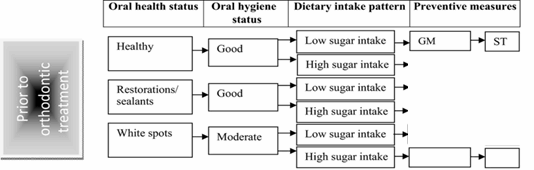
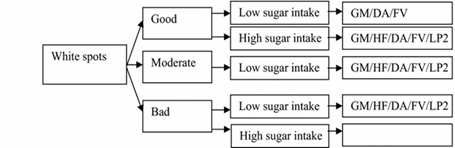
답 : GM2-6, PT, DA/LP3/DB/FV
2017년 03월 31일 QUIZ
Skeletal Maturity Critical for Treating Congenitally Missing Teeth
Dr. Lisa Knobloch 2017.3.31.
문제 1
Considerations for growing patients with congenitally missing teeth
ㆍDetermining the appropriate ( A ) to treat is a complex topic. It is generally agreed that ( B ) is not a considerable method to ㆍdetermine the skeletal maturity.
ㆍNumber of missing teeth
ㆍLocation of missing teeth
ㆍAssessment of skeletal maturity
Tooth agenesis may be classified as either mild or severe hypodontia, also known as ( C ).
ㆍMild hypodontia is the terminology used when up to ( D ) teeth are missing.
ㆍSevere hypodontia or ( E ) refers to the absence of ( F ) or more teeth.
답 : (A) age, (B) chronological age, (C) oligodontia, (D) 5, (E) oligodontia, (F) 6
문제 2
Mild hypodontia
ㆍMissing teeth identification
ㆍMonitoring the eruption of existing permanent teeth
ㆍObjective of orthodontics treatment: to idealize the ( A ) for replacement of congenitally missing teeth while restoring the function and aesthetics.
ㆍAfter the completion of orthodontics treatment: the missing teeth are usually replaced as part of the retention phase or with the transitional removable appliance.
“What is the best method to determine when the patient has reached skeletal maturity?”
ㆍ( B ) cephalometric radiograph, hand/wrist radiograph, and CVM
ㆍIn a comprehensive study comparing chronological age, CVM and hand/wrist radiograph, ( C ) correlations were found between the chronological age and CVM as well the hand/wrist technique.
ㆍ( D ) correlations have been consistently demonstrated between the CVM and hand/wrist method, radiation exposure to patients is minimized by utilizing one of the two techniques.
ㆍ( E ) cephalometric radiograph : specific, monitoring the changes
ㆍImplant restoration prior to the cessation of growth: ( F ) below the surrounding alveolus
답 : (A) space, (B) serial, (C) low, (D) high, (E) serial, (F) submerge
문제 3
Severe hypodontia or oligodontia
ㆍEarly consultation between various ( A ): primary teeth should be maintained until the proper timing of replacement of the missing teeth is determined.
ㆍMore transitional stages of treatment in comparison to the patients missing only a few teeth.
ㆍThe appropriate age to treat: when functional or aesthetic concern is identified.
ㆍComposite restoration, interim acrylic removable appliance
*Final placement of the implant should be delayed until the skeletal maturation.
답 : (A) discipline
문제 4
Hypohidrotic ectodermal dysplasia
ㆍDental manifestation: severe hypodontia or anodontia, abnormal development of the alveolar ridge
ㆍOne clinical situation where implant placement can be considered in the ( A ) prior skeletal maturity.
ㆍTiming: as soon as transverse growth is completed around age ( B ). psychological and physical development of the patients
ㆍConventional removable prosthesis: poor retention and stability due to the ( C ) of the alveolar support
ㆍConservation of bone: early implant placement can slow the alveolar resorption by changing the load mechanism on the bone.
Dental professionals have the ability to impact the child’s life not only at the final rehabilitation of missing teeth but also at every transitional stage during growth.
답 : (A) anterior mandible, (B) 7, (C) lack
2017년 04월 07일 QUIZ
The following question is about the article entitled “predicting improvement of post-orthodontic white spot lesions”. (AJODO 2016;149:625-33)
문제 1
Make PICO of this article.
(1) P : Patients who had at least 1 ( A ) that developed during orthodontic treatment.
I : Orthodontic treatment
C : ( B ) of 4 upper incisors taken within 2 months of debonding and 2 months later.
답 : (A) White spot, (B) Photograph
(2) O : The improvement of white spot lesions was (positively / negatively) associated with patient age, brushing frequency, and greater percentage of surface area. Long treatment time was associated with (increased / decreased) levels of improvement.
답 : positively, decreased
2017년 04월 14일 QUIZ
The following question is about the article entitled “predicting improvement of post-orthodontic white spot lesions”. (AJODO 2016;149:625-33)
문제 1
Fill in the blank.
When we try to use the meta-analysis to estimate a combined effect from a group of similar studies, there needs to be a check that the effects found in the individual studies are similar. However, when the individual estimates of effect have some variation, it is called statistical heterogeneity. Researchers often use the I2 index to quantify the dispersion of effect sizes in a meta-analysis. Some suggest that I2 values of ( A )%, 50%, and ( B )% have been interpreted as representing small, moderate and high levels of heterogeneity.
답 : (A) 25%, (B) 75%

2018년 03월 23일 QUIZ
문제1
In the RCT (Randomized Clinical Trial) study recently (Efficiency of piezotome-corticision assisted orthodontics in alleviating mandibular anterior crowding—a randomized clinical trial. Eur J Orthod 2017;Mar 20:1–6.), Uribe F, Davoody L, Mehr R, Jayaratne Y S N, Almas K et al. showed there was no evidence that piezotome-corticision assisted orthodontics was more efficient in alleviating mandibular anterior crowding. ( O , X )
답 : O
문제2
According the multi-centered study in the US (Schiffman EL, Ahmad M, Hollender L, Kartha K, Ohrbach R, EL Truelove, et al. Longitudinal Stability of Common TMJ Structural Disorders. J Dent Res 2017;96(3):270–276.),
1) Baseline hard tissue diagnoses showed no statistical association with soft tissue changes at follow-up. ( O , X )
2) Longitudinally, 76% of baseline TMJ soft tissue diagnoses and 71% of the baseline hard tissue diagnoses remained stable. ( O , X )
3) Diagnostic reversal and progression were confirmed for both soft and hard tissues. ( O , X )
답 : O, O, O
문제3
To assess the course of the nasopalatine canal using CBCT, out of a consecutive sample collected from April 2008 to August 2012, screenprints were used to measure the inclination of the nasopalatine canal in relation to the maxillary jaw base. Maxillary and mandibular divergence was assessed on rendered lateral cephalograms. (Tilen R, Patcas R, Bornstein MM, Ludwig B, and Schätzle M. The nasopalatine canal, a limiting factor for temporary anchorage devices: a cone beam computed tomography data study. Eur J Orthod 2017;April 1:1–8.)
A statistically significant negative correlation exists between jaw divergence and the canal angulation with regard to the maxillary base. A statistically significant negative correlation exists between the canal angulation and vertical bone measurements at the 4/5 and 3/4 levels.
Explain above underlined paragraph in detail.
답 : Palatal plane과 nasopalatine canal이 이루는 각도를 α라고 했을 때 α값이 클수록 상악골의 bone thickness가 감소하고 nasopalatine의 angulation이 작고 low angle의 안모를 보인다.
문제4
Recently, Faculty of the Ohio State University evaluated Objective Structured Clinical Examination for advanced orthodontic education 12 years after introduction. (Fill the blanks.)
)
1) identify dental relationships, (2) bracket placement, (3) identify problems and plan treatment—mixed dentition, (4) analyze a cephalometric tracing, (5) identify problems and plan treatment—adolescent dentition, (6) place first- and second-order finishing bends, (7) form a loop, (8) identify problems and plan treatment— nongrowing skeletal problems, (9) perform a diagnostic skill, (10) place accentuated third-order bends, (11) identify cephalometric points, (12) superimpose cephalometric tracings, and (13) interpret cephalometric superimpositions.
(Fields HW, Kim DG, Jeon M, Firestone AR, Sun Z, el al. Evaluation of objective structured clinical examination for advanced orthodontic education 12 years after introduction. Am J Orthod Dentofacial Orthop 2017;151:840-50)
답 : 4, 11, 6
2018년 03월 30일 QUIZ
Horizontal ridge dimension - restorative considerations
-
In case of Edentulous site;
Association between bone and soft tissue : ex) height of soft tissue on bony crest
-
In case of Replacement of multiple teeth;
Consideration of factors: span of edentulous space, periodontal attachment level, ( ), soft tissue profile and thickness
Horizontal ridge dimension - orthodontic considerations
-
Horizontal tooth movement (ridge augmentation) - implant support and contour augmentation, stable soft tissue framework for restoration, natural esthetics
-
Benefit: redistribution of tooth space, reduction of size of larger partially edentulous site
Vertical ridge dimension - restorative considerations
Soft tissue augmentation
Vertical ridge dimension - orthodontic considerations
Consideration of factors: periodic reduction in length for occ. Interference, 6-month of stabilization for ( ) reorganization, review of change with pt, endodontic tx
Ridge management in children
Conclusion
답 : alveolar ridge form, transceptal fibers
2018년 04월 13일 QUIZ
문제1
Do you think that there is any difference of condylar positional changes after BSSRO with and without Le Fort I osteotomy?
( )
문제2
Which one is more effective management of orthodontic pain, chewing gum or ibuprofen? What is your opinion?
( )
문제3
Regarding the condylar positional changes after surgery, there is (significant, no significant) difference between mandibular only procedure and combination of maxillary and mandibular procedures. In asymmetry, (more, less) deviated side showed a greater tendency to have both bodily ( ) and rotation.
답 : no significant, more, shift
문제4
There was a (strong, weak, no) positive association between the level of anxiety reported and the pain experienced, following both the initial fitting of the fixed appliances and at the subsequent arch wire change.
답 : weak
2018년 04월 27일 QUIZ
문제1-1
There are 2 types of fixed retainers for lower incisors, canine-to-canine retainer bonded only to the canines and a twistflex retainer 3-3 bonded to each tooth. What is your opinion for the effectiveness of two retainers? (Mark it as a sign of inequality)
① Failure rate: canine-to-canine retainer twistflex retainer
② Incisor stability: canine-to-canine retainer twistflex retainer
답 : <, <
문제2-1
When you bond orthodontic brackets to the acrylic denture teeth as space holders for congenital missing incisor teeth, how do you prepare the surface of acrylic teeth for better bonding strength? Share your ideas with coworkers.
답 : Sandblast, plastic conditioner, boundary
문제3-1
Two types of removable retainers, vacuum formed retainers and Hawley retainers, have been used after active orthodontic treatment. Do you think that there is any difference of patients’ compliance between the 2 types of retainers?
답 : Seating, Esthetic
[After Lecture]
문제1-2
There are 2 types of fixed retainers for lower incisors, canine-to-canine retainer bonded only to the canines and a twistflex retainer 3-3 bonded to each tooth. Please answer the following questions about the effectiveness of two retainers. (Mark it as a sign of inequality)
① Failure rate
canine-to-canine retainer ( ) twistflex retainer 3-3 bonded to each tooth
② Incisor stability
canine-to-canine retainer ( ) twistflex retainer 3-3 bonded to each tooth
답 : =, =
문제2-2
The highest bonding strength was recorded for ( ) followed by ( ) and ( ).
Group 1: no surface preparation of acrylic denture teeth
Group 2: surface preparation with sandblasting
Group 3: surface preparation with abrasion using carbide bur
답 : 2, 3, 1
문제3-2
Choose the answer in the bow below.
( ) are more acceptable to orthodontic patients than the ( ).
답 : VFRs, HR
2018년 10월 12일 QUIZ
Researchers from Roma Linda University investigated the relationship between 6 Maxillary anterior teeth and the bizygomatic width, interpupillary distance, intercanthal distance, interalar width, and intercommissural width of individuals of Asian, African-American, and white ethnicities. According to the study, ethnicity and facial proportions of individuals had ( no , significant ) effect on the mesiodistal dimensions of maxillary anterior teeth.
답 : no
2018년 11월 02일 QUIZ
According to the study about comparison of effects on nasal airflow and resistance using bone-borne & tooth-borne RPE, ( bone-borne RPE , tooth-borne RPE ) is effective in increasing nasal airflow and reduction in nasal resistance
답 : bone-borne RPE
2018년 11월 09일 QUIZ
According to the research about “Association of Flossing in Adults”, a higher prevalence of periodontitis is found in ( male , female ), ( older , younger ) patients, smokers, ( lower , higher ) incomes, and in those who infrequently visit the dentist.
답 : male, older, lower
2018년 11월 16일 QUIZ
1. According to the evaluation of scalp hair nickel and chromium level change in patients with fixed orthodontic appliance,
(1) after 1 year, the level of Ni and Cr in the treatment group were
significantly ( ) compared to baseline.
(2) There was no significant association between the patient’s
( ) and gender.
답 : increased, age
2018년 11월 30일 QUIZ
1. What is Hawthorne Effect ?
2. Describe the impact of the Hawthorne effect on RCT studies.
3. Describe how you can reduce the impact of the Hawthorne effect.
답 :
2018년 12월 07일 QUIZ
1. According to the effect of food simulating liquids on the static frictional forces and corrosion activity of different types of orthodontic wires
(1) ( SS / TMA / NiTi ) showed minimal static frictional forces.
(2) ( SS / TMA / NiTi ) showed the highest corrosion activity in both citric acid and ethanol.
답 :
2019년 3월 15일 QUIZ
1. Compare and mark the magnitude of force generation in large deflection using <, =, >.
Conventional NiTi wire ( > ) Thermally NiTi wire
0.014-inch wire ( < ) 0.016-inch wire
Passive type self-ligation Br ( > ) Active type self-ligation Br
Metal ligature ( > ) Elastomeric ligature
2. Compare and mark the magnitude of bite force using <, =, >
Male ( > ) Female
Long face ( < ) Short face
Wide face ( > ) Narrow face
TMD ( = ) Non-TMD
High BMI index ( = ) Low BMI index
3. Summarize in one sentence with reference to the examples below.
All the experimental mice showed mandibular midline deviation away from the injection side; micro CT scan and hematoxylin and eosin staining of the condyles revealed that the IGF-1-treated condyles increased in length, and bone apposition was noted. Serum tests for presence of IGF-1 were negative, and the control mice and the buffered saline-injected sites of the experimental mice showed no additional growth.
I. Local injection of IGF-1 can promote bone growth in the condyle
II. IGF-1 has systemic adverse effects.
III. There was a negative effect on the growth of the condyle ter IGF-1 injection.
답 : I
4. Patient and his parents asked that how facial profile changed after twin-block treatment. Is the profile at the stage of construction bite for the appliance similar to final appearance?
)
답 : Soft tissue changes by construction bite ------- ( Lt )
Soft tissue changes by Twin-block treatment ------- ( Rt )
2019년 3월 22일 QUIZ
1. According to the research about systematic review and meta-analysis of miniscrews failure rate, the overall failure rate of miniscrews was ( 13.5 %) and (smoking, diabetes mellitus, hypertension) had a statistically significant effect on failure rate.
2. Pre-Eruptive Intracoronal Resorption (PEIR) prevalence has been reported to be 2% to 6% in children and in 1% to 2% of their teeth. Currently, the etiology of PEIR is not resolved but the authors postulated that (dental impaction) may lead to inflammation and the entry of (resorptive ) cells into the dentin may cause the PEIR.
3. Rapid maxillary expansion and face mask maxillary protraction therapy might (increase, decrease, maintain) the upper airway space changes in children or young adolescents.
4. Sensitivity analysis or (leave-one-out analysis) in meta-analysis can be performed by iteratively removing 1 study at a time to confirm that the final findings were not driven by any single study.
2019년 4월 05일 QUIZ
1. Patient came to the dental clinic because the upper canines did not erupt. Based on the results of Naoumova J et al., suggest treatment plan of #13 and 23 and rationale.
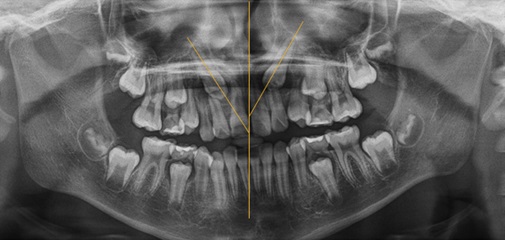
#13 Alpha angle : 32°
#23 Alpha angle : 24°
답 : #13 : surgical exposure
#23 : Interceptive deciduous canine extraction
2019년 4월 19일 QUIZ
1. Based on the results of Rogers K, et al.,
1) the Herbst appliance had a dentoalveolar effect in ( improving mandibular / restricting maxillary ) growth.
2) Hypodivergent subjects experienced a ( forward / backward ) mandibular rotation and hyperdivergent patients underwent
a ( forward / backward ) mandibular rotation.
2. Based on the results of Jin C, et al. about survial time of orthodontic
retainers,
(Hawley retainer / vacuum formed retainer /
lingual fixed retainer / COMBO ) had the longest survival times.
2019년 5월 10일 QUIZ
1. According to the results of Alghyarbi M, et al. which reviewd the
effects of different types of RME device,
which type of RME most effective in the treatment of the
maxillary constriction?
(Tooth-tissue-borne type / Tooth-borne type /
Tooth-bone-borne type / Bone-borne type / bonded type)
2. Based on the results of Nichols GAL, et al. about long-term
changes in oral health-related quality of life,
describe why the cleft group had generally worse scores than did
either of the other groups.
답 : cleft 환자의 교정치료는 복잡하고 어렵다.
시간이 지날 수 록 교정치료 결과의 기대치가 높아진다.
2019년 5월 10일 QUIZ
1. ( Increased BMI ) appears to be a risk factor for less appliance wear during orthodontic treatment with removable appliances. Additional factors which influenced cooperation during treatment with removable appliances were
( patient age ) and ( appliance type )
|
Increased BMI, Decreased BMI, gender, patient age, appliance type |
(Increased BMI in children—an indicator for less compliance during orthodontic treatment with removable appliances. J von Bremen et al. Eur J Orthod 2018;40:350–5)
2. The authors conclude that based on current clinical evidence obtained from RCTs, Self-ligating brackets do not show clinical superiority compared to conventional brackets in expanding transversal dimensions, space closure, or orthodontic efficiency. ( O / X )
(Transversal changes, space closure, and efficiency of conventional and self-ligating appliances -A quantitative systematic review. X Yang et al. J Orofac Orthop 2018;79:1–10)
3. For the correction of mesial tipped and extruded 2nd molar, only
( the rec - ) produced a system of force that could correct it. For the correction of distal tipped and extruded 2nd molar, both group mechanics produced a system of force compatible with the correction of the 2nd molar, but ( the continuous wire ) produced larger moments.
|
the rectangular loop, the continuous wire, both group |
(Continuous arch and rectangular loops for the correction of consistent and inconsistent load systems in extruded and tipped maxillary second molars. RL Shintcovsk et al. Am J Orthod Dentofacial Orthop 2018;153:396-404)
4. The authors found that the 0.022-inch bracket slot was associated with a shorter treatment time, ( O / X )
and
bracket slot sizes did not influence the quality of orthodontic finishing.
( O
/ X )